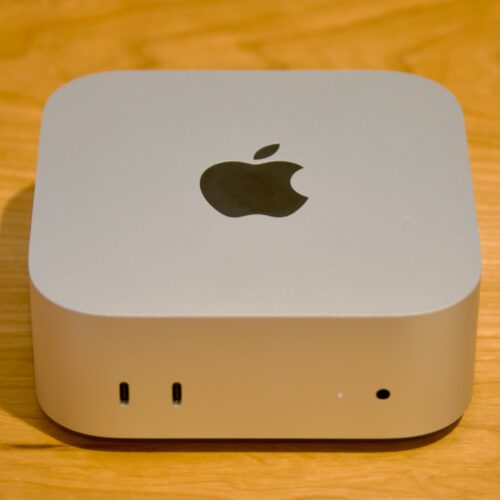
Apple's latest desktop iteration brings powerful M6 architecture and groundbreaking 'Super' cores to the compact Mac mini chassis. However, an unprecedented memory crunch forces a striking $300 price hike, challenging the machine's historic status as a premier hardware value.
By Nexvoro Tech Wire
PUBLISHED MON, SEP 21, 2026 2:26 PM UTC • 7 MIN READ
The Anatomy of a Classic Hardware Refresh and a Volatile Market
The launch of the new Apple Mac mini represents a playbook upgrade strategy that the Cupertino giant has executed a million times over. On the surface, the machine maintains the exact physical design of its immediate predecessor, packing a fresh generation of silicon into a familiar frame. These play-it-safe hardware updates are rarely designed to shock the industry; instead, they are traditionally defined by unmitigated upside. Consumers expect to receive a year or two worth of cumulative technological improvements while maintaining the exact price point they would have paid for the older iteration just a day prior.
Unfortunately, the macroeconomic reality of 2026's unprecedented global memory crunch has thoroughly upended standard operating procedure. Rather than maintaining the accessible baseline established by its predecessor, the new desktop system now commands a steep starting price of $899 for the base configuration featuring 16GB of RAM and 256GB of storage. This figure represents a dramatic $300 increase for the exact same memory and storage specifications that consumers could easily purchase for $599 in the 2024 M4 Mac mini.
Historically, the M4 Mac mini proved to be a watershed moment for general-purpose desktop computing, earning a reputation as one of the single greatest values Apple had ever engineered into a desktop Macintosh. The newly minted M6 Mac mini, by contrast, walks a more complicated tightrope. While its raw processing architecture undeniably impresses, it can only claim to be one of those two historic traits - leaving the market to grapple with the bitter pill of inflationary hardware costs.
Industrial Design, Physical Dimensions, and Connectivity Trade-Offs
When Apple rolled out the M4 Mac mini, it introduced the product line's first major full redesign in nearly 15 years. It should come as little surprise, then, that the M6 iteration retains those exact physical proportions. Compared against older Intel-based units and the pioneering M1 or M2-era versions, the current chassis stands slightly taller at 2 inches - up from the legacy 1.4 inches - while successfully shrinking its desktop footprint to a remarkably compact 5x5-inch square, down significantly from the older 7.7 inches squared.
Thermal management remains a priority for this form factor. The system relies on active cooling, featuring a strategic fan vent positioned on the bottom panel to ensure that high-performance internal silicon can sustain high clock speeds over prolonged workloads. This gives it a distinct performance advantage over passively cooled Apple Silicon architectures, such as the MacBook Air, which traditionally throttle slightly earlier during intense, sustained computational tasks. Front-facing connectivity includes two 10 Gbps USB-C ports alongside a standard headphone jack, while the rear panel houses a default 2.5 Gbps Ethernet port - with a 10 Gbps configuration available as an optional upgrade - and a standard HDMI output.
In terms of peripheral connectivity, both standard and high-end variants pack three Thunderbolt ports on the rear chassis, though underlying hardware divides them neatly. The M6 Mac mini relies on Thunderbolt 4 capabilities, meaning its ports top out at 40 Gbps, whereas the unreviewed M5 Pro variant steps up to Thunderbolt 5 speeds reaching up to 120 Gbps. While few everyday desktop tasks fully saturate that level of extreme bandwidth - particularly given Apple's continued lack of external GPU support - power users should note that a Thunderbolt 5 Mac is required to daisy-chain multiple computers together into a high-performance compute cluster.
The M6 Silicon Leap: Introducing 'Super' Cores to the Desktop
Apple's inaugural M6-series chip makes its global commercial debut inside the humble Mac mini chassis, delivering what appears to be the most substantial architectural upgrade lower-end Apple Silicon has experienced since the M4 generation integrated dedicated efficiency cores. The headliner of this new silicon layout is the integration of two proprietary 'Super' cores - Apple's specific nomenclature for performance cores designed to outpace its already rapid standard P-cores.
These specialized processing units sit on top of four standard P-cores and six efficiency cores, culminating in an impressive total of 12 CPU cores. By comparison, both the M4 and M5 generations capped out at 10 CPU cores. The M4 split its layout between four regular P-cores and six E-cores, whereas the M5 split its architecture between four super cores and six E-cores. Interestingly, the M5's cores were initially labeled simply as P-cores when that generation launched, only to be rebranded later when the M5 Pro and Max tiers debuted. This contrasts sharply with the M1, M2, and M3 generations, which uniformly relied on a balanced layout of four P-cores and four E-cores.
Ergonomic Friction and the Ongoing Portability Debate
Despite the leaps in raw computational power and architectural efficiency, certain legacy design choices continue to draw sharp criticism from tech reviewers and daily users alike. The most glaring ergonomic grievance remains the bottom-rear-mounted power button. Complaints regarding this placement appear to be routed directly to the corporate filing cabinet where Apple stores long-standing grievances regarding the Magic Mouse's famously bottom-mounted charging port.
In everyday desktop workflows, this design quirk rarely surfaces if users simply allow their macOS system to enter sleep mode rather than forcing a complete physical shutdown. However, the positioning problem becomes glaringly apparent when pairing the compact desktop with an external keyboard equipped with TouchID. Utilizing this security feature requires a quick, manual double-tap of the Mac mini's physical power button to wake the internal sensor before authentication can proceed.
As the industry assesses the broader implications of the M6 generation - with performance details for higher-tier chips like the M5 Pro slated for forthcoming MacBook Pro and Mac Studio evaluations - the overarching narrative remains split. The hardware engineering inside the chassis represents a triumph of modern semiconductor design, yet the harsh realities of component pricing and supply chain pressures ensure that upgrading to Apple's latest desktop vision carries a heavier financial penalty than ever before.
Reporting synthesized under Nexvoro.tech Editorial Standards • Referenced via Ars Technica
Verified Dispatch