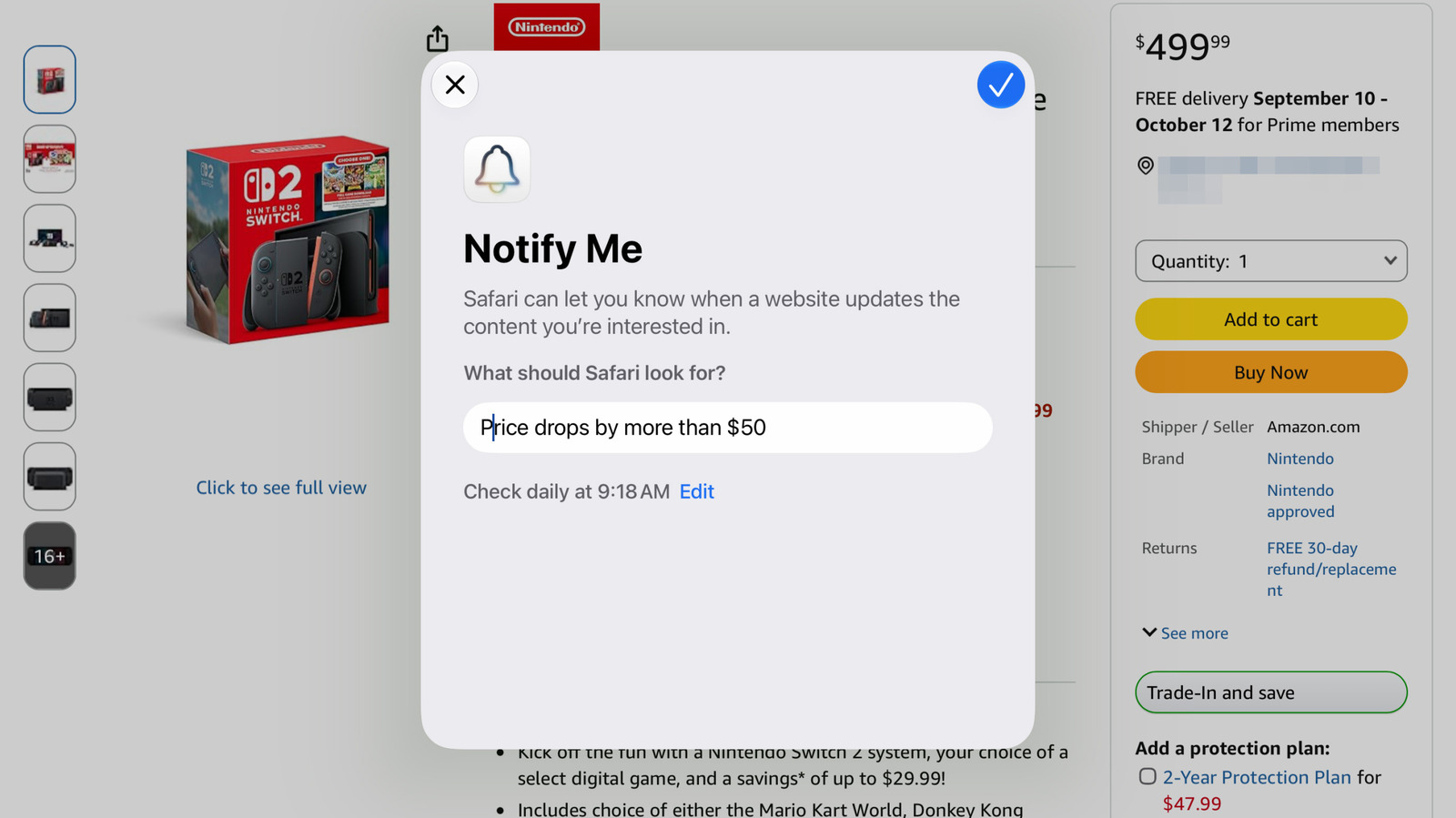
Apple's deep-level integration of native price and inventory tracking via Safari's 'Notify Me' tool is sending subtle yet profound shockwaves through the e-commerce landscape. By democratizing enterprise-grade retail intelligence directly into the iOS and macOS ecosystems, Cupertino is cutting off third-party extensions and challenging the traditional conversion funnel.
The Quiet Incursion Into E-Commerce Intelligence
For years, the multi-billion-dollar retail surveillance and consumer tracking market relied on an intricate web of third-party browser extensions, dedicated price-drop apps, and affiliate-driven coupon aggregators. Platforms like Honey, CamelCamelCamel, and Capital One Shopping built thriving ecosystems by sitting between the consumer and the merchant, gleaning vital behavioral telemetry and purchase intent data.
Now, Apple is systematically dismantling that middleman architecture. With the refinement of Safari’s native 'Notify Me' feature across iOS, iPadOS, and macOS, Cupertino has deployed an enterprise-grade surveillance capability directly into the browser viewport. Without requiring third-party bloatware, OAuth credentials, or risky cross-site permission grants, Apple’s ecosystem can natively monitor product inventory fluctuations and price-drop vectors at scale.
For the casual user, it is a convenient utility—a silent digital assistant pinging their Apple Watch when a coveted pair of sneakers or high-end consumer electronics drops in price. But for Wall Street analysts, e-commerce giants, and digital marketing executives, 'Notify Me' represents a strategic paradigm shift. It is a calculated move to capture top-of-funnel consumer intent, tighten the walls of the garden, and redefine how retail analytics are harvested and weaponized.
Dissecting the Mechanics: How Apple Built a Native Price Engine
Under the hood, Safari’s 'Notify Me' tool operates through a sophisticated synergy of structured data parsing, local device intelligence, and Apple Push Notification service (APNs) architecture. When a user navigates to a supported retail page that adheres to Schema.org product markup and Open Graph standards, Safari parses the underlying Document Object Model (DOM) to identify inventory states and dynamic pricing nodes.
Unlike traditional third-party extensions that periodically ping central servers to scrape page data—often triggering anti-bot firewalls like Cloudflare or Akamai—Apple’s native integration leverages optimized browser-level hooks. When a tracked item undergoes a price reduction or shifts from out-of-stock to available, the merchant’s backend signaling interacts with Safari’s persistent state checks. The result is a frictionless, power-efficient notification delivered straight to the user’s Lock Screen or Notification Center.
This architecture bypasses the need for continuous background data harvesting by third-party entities. By keeping the intent loop entirely within first-party boundaries, Apple reinforces its privacy narrative while simultaneously ensuring that consumer engagement metrics stay anchored to Safari rather than migrating to competing Chrome extensions or dedicated retail apps.
The Wall Street Impact: Squeezing the Affiliate Economy
The financial implications for the broader digital advertising and affiliate marketing sectors are immediate and severe. Venture-backed shopping assistants and browser extension companies have long justified their valuations on their ability to capture user intent and redirect traffic via lucrative affiliate link injection.
When Safari natively handles price tracking and stock alerts, the consumer has zero incentive to install or engage with auxiliary tools. This shifts the power dynamic decisively. Merchants, who previously had to pay hefty customer acquisition costs (CAC) or affiliate bounties to third-party trackers when a user finally converted on a dropped price, are now facing a different reality: Apple is capturing that high-intent consumer touchpoint for free.
Furthermore, institutional investors are taking note of how this impacts direct-to-consumer (DTC) brands and major marketplaces like Amazon, Walmart, and Target. As native browser tools condition shoppers to wait for automated alerts rather than impulse-buying at peak pricing, retail margins face renewed compression. Price elasticity curves are tightening, forcing enterprise retailers to recalibrate their dynamic pricing algorithms to account for a consumer base armed with automated, real-time surveillance tools.
The Competitive Chessboard: Apple vs. Google and the Browser Wars
In the grand chess match of digital ecosystems, Safari’s feature rollout is a direct salvo against Google Chrome's dominance. Google, as both the world's leading search engine and the purveyor of the Chromium browser project, has historically relied on search history and Shopping graph integrations to capture buyer intent.
By building robust, privacy-centric utility directly into Safari, Apple strengthens its competitive moat against Google's advertising hegemony. While Google’s tracking mechanisms are inextricably linked to ad targeting and profiling, Apple frames its feature through the lens of pure utility and uncompromising user privacy. This branding differential continues to sway high-value consumer demographics—particularly in the North American market, where iOS commands dominant market share among high-disposable-income cohorts.
Moreover, this move pressures Microsoft Edge, which has aggressively leaned into shopping features like built-in coupon finders and price comparisons. As browsers evolve from simple windowpanes into active transactional agents, the browser that offers the most intelligent, frictionless, and private shopping assistant wins the default slot.
Regulatory Scrutiny and the Antitrust Tightrope
As Apple tightens its grip on first-party utility features, it walks a delicate regulatory tightrope. In an era where antitrust regulators in the United States and the European Union are scrutinizing big tech platforms for self-preferencing and anticompetitive ecosystem lock-in, any move that disadvantages third-party developers is met with immediate suspicion.
Competitors and regulatory watchdogs will inevitably question whether native integration of features like 'Notify Me' creates an insurmountable barrier to entry for independent shopping apps. If Apple’s browser features possess systemic advantages—such as deeper battery optimization, zero permission prompts, and privileged access to system notifications—third-party alternatives may argue they are being marginalized on their own platform.
However, Apple’s legal defense remains anchored in product enhancement and consumer benefit. Cupertino will undoubtedly argue that native price tracking is merely a functional evolution of the modern web browser, akin to built-in password managers or PDF readers. Navigating this regulatory gray zone will require Apple to maintain precise compliance boundaries while continuing to ship features that consumers demand.
Strategic Outlook: The Autonomous Retail Assistant
Looking ahead, Safari’s 'Notify Me' tool is merely a foundational stepping stone toward a more autonomous retail future. As Apple integrates generative AI capabilities and advanced on-device machine learning models into future iterations of iOS and macOS via Apple Intelligence, basic price tracking will evolve into predictive market analysis.
Imagine a near-future where Safari doesn't just notify you that a product is on sale, but actively predicts—based on historical pricing data, macroeconomic supply chain trends, and seasonal discount cycles—whether you should buy now or wait forty-eight hours for a deeper markdown. By embedding these intelligent agents directly into the operating system, Apple is positioning itself not just as a hardware manufacturer or software provider, but as the ultimate gatekeeper of global consumer commerce.