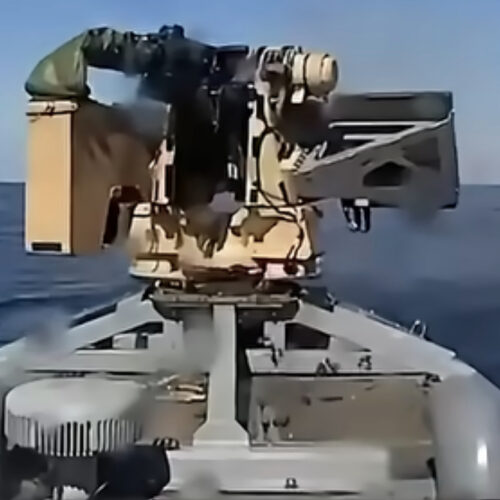
In what is believed to be the world's first combat clash between uncrewed surface vessels, a Ukrainian naval drone successfully hunted down and sank a Russian explosive drone boat in the Black Sea using a remote-controlled machine gun turret. The landmark engagement marks a dramatic evolution in modern asymmetric naval warfare.
By Nexvoro Tech Wire
PUBLISHED MON, SEP 21, 2026 10:50 PM UTC • 7 MIN READ
The First Clash of the Drone Boats
In what defense analysts are calling a historic milestone for modern naval warfare, the world's first recorded clash of uncrewed surface vessels (USVs) has unfolded in the contested waters of the Black Sea. The lopsided engagement took place on September 12, when members of Ukraine's Defense Intelligence successfully detected a hostile Russian explosive drone boat operating in the region. Upon confirmation, operators directed a Ukrainian Navy drone boat to execute an immediate interception mission, pushing the boundaries of remote naval combat into uncharted territory.
The Russian vessel was positively identified by defense experts as an Orcan surface drone, a specialized craft featuring a jet ski-type steerable water jet designed primarily for high-speed ramming attacks and targeted detonations. According to prominent naval analyst HI Sutton, writing in Naval News, such Orcan drones have increasingly been utilized by Moscow's forces to launch coordinated strikes against critical Ukrainian ports and naval infrastructure. These surface units frequently operate in tandem with aerial reconnaissance assets, such as Russian Geran drones, which enhance battlefield visibility and bolster communications between remote operators and their surface-level assets.
Faced with this emerging threat, the Ukrainian military deployed a highly sophisticated counter-measure: a Sargan-3000 drone boat equipped with a 12.7 mm machine gun mounted on an advanced remote weapon station manufactured by the Norwegian defense firm Kongsberg. The encounter highlights the rapid technological convergence occurring across contemporary battlefields. As naval expert HI Sutton observed in an interview with New Scientist, the emergence of USV-on-USV combat was an absolute inevitability, mirroring the tactical adaptations previously witnessed in both aerial and ground domains over the course of the conflict.
Tactical Execution and Technical Capabilities
Official footage released by the Ukrainian Navy and distributed via the government media platform United24 documents the precision of the engagement. The video captures the Sargan-3000 targeting the Russian drone from a distance of approximately one kilometer. In a matter of moments, the Ukrainian uncrewed vessel successfully disabled the enemy's communications antenna before systematically riddling the Russian craft with machine gun fire until it completely broke apart and sank beneath the waves.
Detailed specifications released by Ukrainian media outlets underscore the formidable engineering behind the Sargan-3000 platform. The multipurpose Ukrainian drone is engineered to reach blistering operational speeds ranging from 40 to 55 knots, boasting an impressive operational range of up to 1,600 kilometers (994 miles). Furthermore, the vessel is capable of carrying a massive payload of up to 450 kilograms (992 pounds), providing military planners with immense operational flexibility depending on the tactical requirements of a given mission.
Beyond defensive interception and machine gun engagements, this versatile platform can also be configured with a heavy explosive payload designed explicitly for offensive ramming maneuvers. The Ukrainian Navy previously claimed that a similar drone successfully struck and sank a Russian border patrol ship named the Izumrud in July 2026, demonstrating the platform's lethal dual-purpose utility in ongoing maritime operations across the theater.
Asymmetric Strategy and the Black Sea Theater
Ukraine's heavy strategic focus on developing and deploying advanced drone boats has fundamentally altered the balance of power within the Black Sea. By leveraging innovative uncrewed systems, Kyiv has successfully waged asymmetric warfare against the heavily armed warships of the Russian Navy's Black Sea Fleet. These coordinated campaigns have resulted in the sinking of multiple Russian vessels and effectively forced surviving warships to hunker down in heavily defended ports to avoid similar fates.
In addition to targeting conventional naval assets, Ukraine has successfully deployed a combination of aerial and surface drones to interdict commercial ships transporting sanctioned Russian oil and gas. Operations have also targeted logistical supply vessels ferrying military cargo to the Russian-occupied Crimean Peninsula, territory that Russia seized from Ukraine in 2014. These tactics have created persistent logistical challenges for Moscow's forces while preserving high-value human capital on the Ukrainian side.
Moreover, the evolution of naval drone innovations continues to expand into complex multi-domain operations. Ukrainian forces have increasingly utilized drone boats to deploy ground robots during specialized amphibious assaults. Additionally, uncrewed surface vessels are now being deployed as floating motherships capable of launching first-person view (FPV) drones to strike Russian military positions situated near the strategic coastline of the Black Sea.
Global Proliferation and Broader Implications
While Ukraine has pioneered many of these naval tactics, rival military powers have rapidly adapted their doctrines to incorporate similar uncrewed maritime systems. Russia has increasingly deployed its own naval drones to target Ukrainian infrastructure, raising urgent security concerns across Europe regarding the future safety of vital maritime corridors and critical offshore energy installations. Illustrating this growing continental vulnerability, a Russian drone boat heavily loaded with explosives drifted dangerously close to a critical European natural gas platform in the Black Sea during August, prompting a rapid response that culminated in the craft being disabled by a Romanian fighter jet.
Simultaneously, the strategic utility of drone boats has expanded globally, featuring prominently in concurrent conflicts such as the US-Israeli operations involving Iran. The United States military's uncrewed surface vessels recently made their official combat debut by executing an attack against an Iranian port facility in July. In a separate engagement, US drone boats played a vital rescue role following the downing of a US Army helicopter gunship by an Iranian flying Shahed drone near the fiercely contested Strait of Hormuz. Despite these technological milestones, defense analysts caution that such US military uncrewed assets remain unlikely to fundamentally neutralize Iran's capacity to threaten international commercial shipping within the vital chokepoint of the Strait of Hormuz.
Reporting synthesized under Nexvoro.tech Editorial Standards • Referenced via Ars Technica
Verified Dispatch