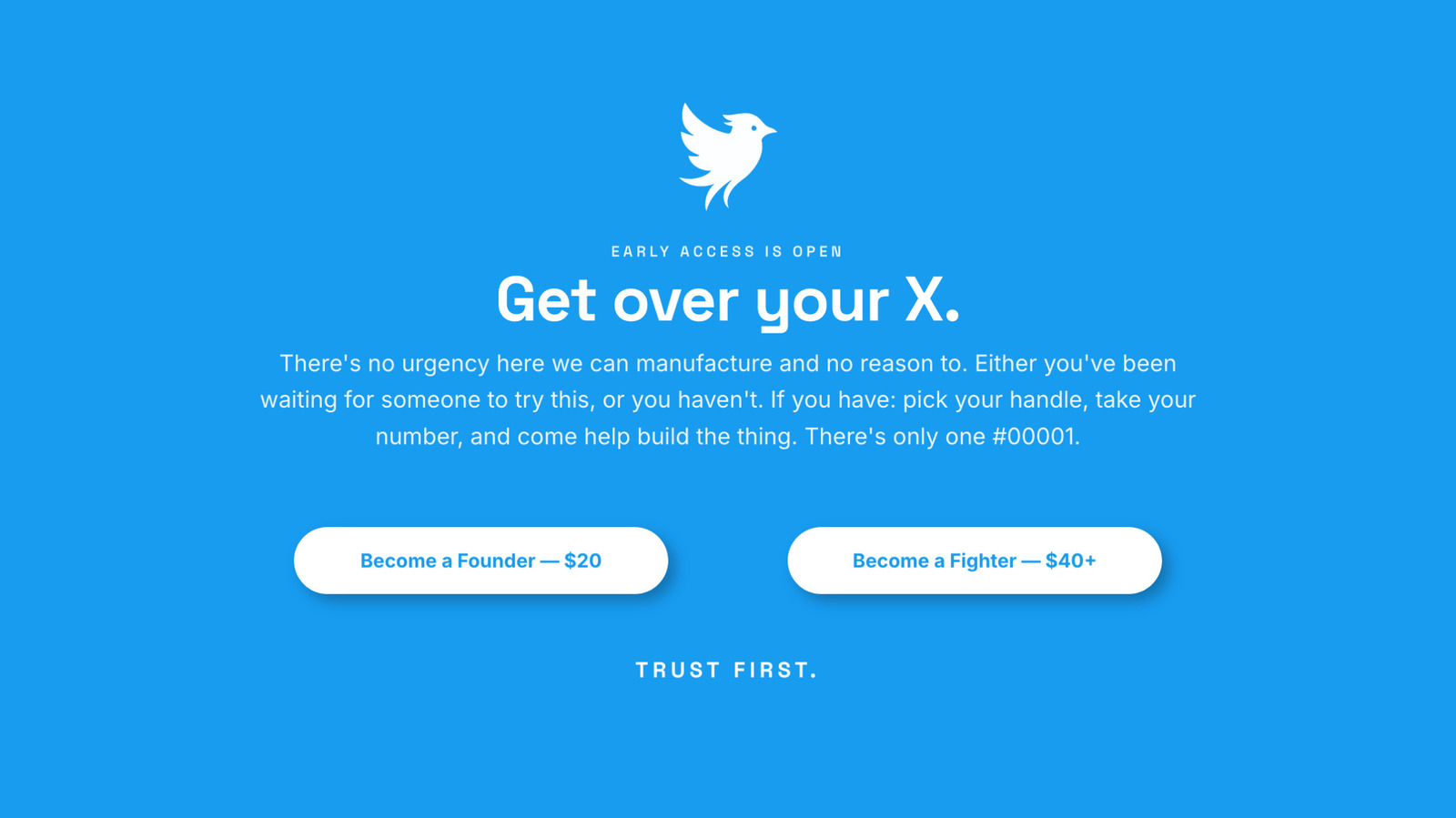
A landmark federal court ruling has partitioned the identity of social media's most controversial platform, forcing a high-stakes pivot to Tweet.app after an intellectual property split.
By Nexvoro Tech Wire
PUBLISHED SAT, SEP 5, 2026 4:29 PM UTC • 6 MIN READ
The Anatomy of a Fragmented Identity
In the high-stakes theater of Silicon Valley intellectual property law, few battles have unfolded with the bizarre symmetry of the recent federal court ruling concerning social media’s most debated platform. When a federal judge handed down a split-the-baby verdict regarding the legacy assets of the platform formerly known as Twitter, legal scholars and enterprise observers alike realized the landscape of digital branding had entered uncharted waters. The court drew a sharp, uncompromising line down the middle of the company's historical equity: the standalone corporate name and primary moniker 'Twitter' remained legally fenced off-limits, protected by existing trademark registrations and prior commercial usage claims. Yet, in a twist that stunned corporate legal teams, secondary cultural artifacts—specifically the verb 'tweet' and the iconic avian silhouette long associated with microblogging culture—were ruled to be fair game.
For executives attempting to navigate the volatile landscape of modern digital identity, this ruling serves as both a cautionary tale and an aggressive market signal. Brands are no longer monolithic fortresses; under the pressure of aggressive corporate restructuring and targeted litigation, their constituent parts can be unbundled, litigated separately, and redistributed. The entity colloquially tracked by markets as 'New Twitter' found itself staring down a branding crisis that went far beyond mere aesthetics. To survive in an ecosystem governed by algorithmic discovery and direct-to-consumer trust, leadership was forced into a rapid, high-visibility pivot, emerging under a domain-forward identity: Tweet.app.
Wall Street's Calculus on Brand Equity and Valuation
For institutional investors and venture capital analysts tracking the social media sector, the forced rebrand to Tweet.app presents a complex valuation puzzle. Brand equity is traditionally calculated as an intangible asset that drives customer acquisition cost (CAC), retention, and pricing power. When a platform is legally stripped of its primary marquee name, Wall Street models must immediately re-evaluate future cash flows against the friction of consumer confusion.
However, market analysts point out a fascinating paradox in this specific litigation: while losing the 'Twitter' name stings from a legacy institutional standpoint, retaining 'tweet' and the bird logo preserves the core emotional resonance of the service. Users do not 'post a twitter'; they tweet. By pivoting the official enterprise destination to Tweet.app, leadership has leaned into the vernacular of the user base rather than corporate nomenclature. Equity analysts note that this reduces the cognitive load of the transition for everyday consumers, shielding daily active user (DAU) metrics from the catastrophic churn typically associated with emergency rebrands. Even so, institutional backers remain watchful, demanding transparent metrics on how the new domain architecture impacts enterprise ad-sales pipelines and API monetization.
The Competitive Chessboard and the Domain Era
In the broader competitive arena, the rise of Tweet.app marks a calculated assault on traditional web architecture in favor of decentralized, domain-centric utility. For years, tech giants anchored their empires to sprawling .com domains and monolithic brand architectures. Today, the competitive chessboard is shifting toward utility-driven, app-centric branding models that bypass legacy naming conventions entirely.
Competitors ranging from decentralized networks like Mastodon and Bluesky to legacy giants like Meta’s Threads are watching this transition closely. By formally embracing 'Tweet.app,' the platform is deliberately signaling a lean toward modern, mobile-first, and protocol-adjacent infrastructure. This move alters the competitive dynamics in several ways:
1. It forces rivals to rethink how they protect generic terminology within social media interaction loops.
2. It establishes a precedent for how distressed or restructured tech firms can salvage cultural mindshare when corporate parent names become toxic or legally encumbered.
3. It tests whether modern consumers care about corporate nomenclature as long as the underlying utility and network effects remain uninterrupted.
Regulatory Scrutiny and the Intellectual Property Precedent
From a regulatory standpoint, the federal court's decision introduces significant friction into the doctrine of trademark abandonment and fair use in the digital age. Traditionally, trademark law protects the holistic commercial impression of a brand. By parsing a digital platform into distinct legal components—separating the corporate identifier from the user-generated action ('tweet') and the graphical icon—the court has opened a Pandora's box of intellectual property fragmentation.
Legal experts suggest this ruling will embolden aggressive litigants to target the individual components of tech giants' portfolios. If a brand name can be severed from its linguistic verbs and visual motifs, corporate legal departments must radically revise their defensive filing strategies. For the regulatory bodies overseeing digital commerce, this case highlights the urgent need for modernized frameworks that address how digital vernacular interacts with statutory trademark protections. The line between generic language use and proprietary corporate identity is blurring, creating a high-stakes environment where every startup's lexicon is vulnerable to preemptive legal challenges.
Strategic Outlook: Surviving the Transition
As Tweet.app takes its first steps under its newly minted identity, the strategic imperative shifts entirely to execution. The engineering and product teams face the monumental task of updating backend routing, mobile application manifests, API endpoints, and global advertising dashboards without triggering systemic downtime or security vulnerabilities. Furthermore, enterprise partners and third-party developers relying on the platform's infrastructure must rapidly adapt their integrations to reflect the new domain reality.
Yet, within this operational turbulence lies an opportunity for reinvention. Free from the baggage of its predecessor's protracted legal battles, Tweet.app has the structural agility to redefine its value proposition to advertisers and creators alike. Whether this fractional rebrand will be remembered as a desperate maneuver or a masterclass in resilient corporate pivoting remains one of the defining tech stories of the decade. One thing is certain: in the modern digital economy, a brand is no longer just a name—it is a fiercely contested portfolio of linguistic and visual assets, where survival belongs to those who can adapt the fastest.
Reporting synthesized under Nexvoro.tech Editorial Standards • Referenced via Engadget
Verified Dispatch