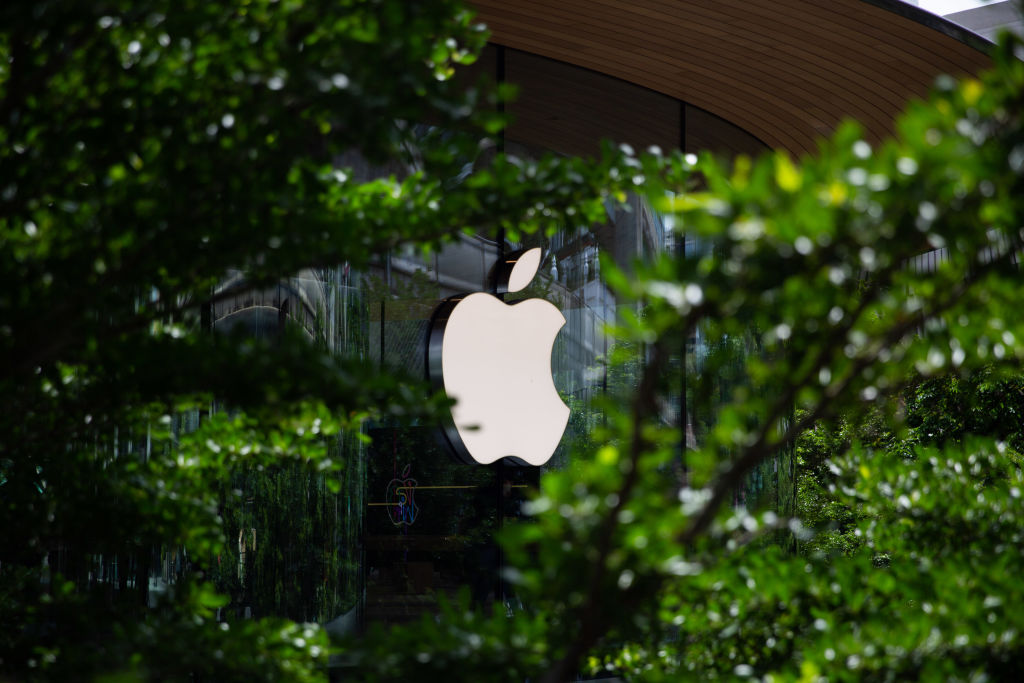
As tech giants pour billions into agentic commerce and automated purchasing, retail pioneer Ron Johnson argues that high-stakes consumer habits and physical touchpoints will ultimately keep human shopping thriving. Drawing from his historic tenure building Apple's iconic storefronts alongside Steve Jobs, Johnson examines why artificial intelligence can never truly replace the in-person retail experience.
By Nexvoro Tech Wire
PUBLISHED TUE, SEP 22, 2026 1:24 AM UTC • 7 MIN READ
The Silicon Valley Push Toward Agentic Commerce
While Silicon Valley continues to spend billions of dollars to make artificial intelligence agents shop on behalf of consumers, the visionary mastermind who pioneered Apple's retail stores believes the industry is severely overestimating how much of the shopping experience people will willingly hand over to machines. Amid massive technological shifts - showcased prominently at industry gatherings like Disrupt 2026, where major players like OpenAI, Anthropic, and Replit took over six industry stages - the prevailing narrative among tech giants has pivoted heavily toward automated acquisition.
This aggressive push toward agentic commerce is designed to fundamentally alter how everyday consumers find and buy items. Google is aggressively leaning into this paradigm shift with its Universal Commerce Protocol, an ambitious technical standard specifically designed to help AI agents seamlessly navigate consumers from initial product discovery all the way through to final checkout. Simultaneously, OpenAI is actively transforming ChatGPT into a comprehensive shopping destination where users can research, carefully compare, and in many cases directly purchase products without ever leaving the conversational interface of the chatbot.
Yet, this headlong rush into algorithmic retail stands in sharp contrast to decades of consumer psychology and physical retail resilience. Industry leaders are betting that software agents can completely automate the friction points of modern consumerism. However, retail veterans argue that technology companies may be misjudging the fundamental emotional and sensory drivers that compel human beings to open their wallets, especially for high-value durable goods and technology products.
The Limits of AI in High-Stakes Consumer Purchases
Ron Johnson, 66, has heard dramatic predictions about the imminent demise of physical retail before. He originally joined Apple back in the year 2000 to construct its revolutionary retail business right as online shopping was beginning to take off, eventually helping to forge a global store network that became central to how Apple sells its iconic hardware and connects directly with its loyal customer base. Drawing from this deep reservoir of historical experience, Johnson remains deeply skeptical about the true scope of automated buying.
"AI is a new technology that will improve the online shopping experience," Johnson remarked in a candid recent interview regarding the broader tech landscape. "But I don't know that it's going to change which way we shop." When explicitly asked whether he could realistically imagine a consumer letting an autonomous agent choose and purchase a $1,000 or $2,000 laptop without ever visiting a physical website or stepping foot inside a brick-and-mortar store, Johnson was entirely unequivocal in his assessment: "Honestly, nobody's going to do that."
Buying an expensive laptop, he argued persuasively, is an inherently personal purchase that is far too significant to simply delegate entirely to an algorithmic AI agent. Prospective buyers naturally want to physically feel its weight, evaluate the brilliance and color accuracy of the display, and decide firsthand which exact screen size works best for their daily workflows. While AI may certainly help narrow down consumer choices before a purchase, Johnson noted that many consumers will still demand the ability to experience the product firsthand before parting with significant sums of money.
Apple's Human-Centric Retail Blueprint
Johnson's unshakeable conviction ultimately stems from a strategic decision that Apple made more than two decades ago under the guidance of co-founder Steve Jobs. Apple's physical stores, he explained, were intentionally designed not merely as transactional places to buy Mac computers, but rather as immersive environments where everyday people could thoroughly try products, learn how to utilize advanced software features, and return easily for personalized human help when technical issues arose.
Some of these foundational operational bets are revisited in great detail within 'Shop Different: How Retail Revealed Apple's Genius', Johnson's compelling new book detailing the gritty realities of building Apple's retail operations alongside Jobs. According to Johnson, major retail competitors frequently attempted to copy Apple's signature glass-heavy architectural design, wide-open floor layouts, and even early iterations of the famous Genius Bar, but they routinely missed the most critical element: the people.
"The secret sauce for Apple has always been its people, the people in the store, and how they treat the customer," Johnson emphasized. Going against standard retail conventions, Apple Store employees were never paid on commission - a stark contrast to the aggressive sales-driven culture that permeates much of the broader traditional retail sector. The core concept behind this radical policy was to completely remove the high-pressure environment to sell, allowing store staff to focus instead on figuring out what a customer actually and genuinely needed.
From Cupertino to J.C. Penney: Lessons in Transformation
Following his wildly successful tenure at Apple, Johnson made a high-profile career move in 2011 to take over J.C. Penney with an exceptionally ambitious strategic plan to completely reinvent the struggling, traditional department-store chain. However, the turnaround effort encountered immediate friction, and Johnson was ultimately ousted from the executive suite less than two years later after company sales experienced a dramatic and precipitous plunge.
Reflecting back on that turbulent chapter of his career, Johnson now acknowledges that he attempted to change far too much, far too quickly, without adequately bringing existing employees and loyal customers along for the transformative journey. Apple's retail stores, by comparison, had effectively operated as an agile startup that evolved organically alongside the company's expanding hardware and software product lineup. J.C. Penney, conversely, was a legacy turnaround that demanded an entirely different operational playbook and pace of change.
Ultimately, Johnson expects that rather than replacing human shopping entirely, AI agents will simply act as sophisticated research assistants that better inform consumers before they ever walk through a store's doors. "They'll just become more informed shoppers when they come to the store," Johnson concluded, reinforcing his lifelong thesis that physical spaces and human interactions remain irreplaceable anchors of modern commerce.
Reporting synthesized under Nexvoro.tech Editorial Standards • Referenced via TechCrunch
Verified Dispatch