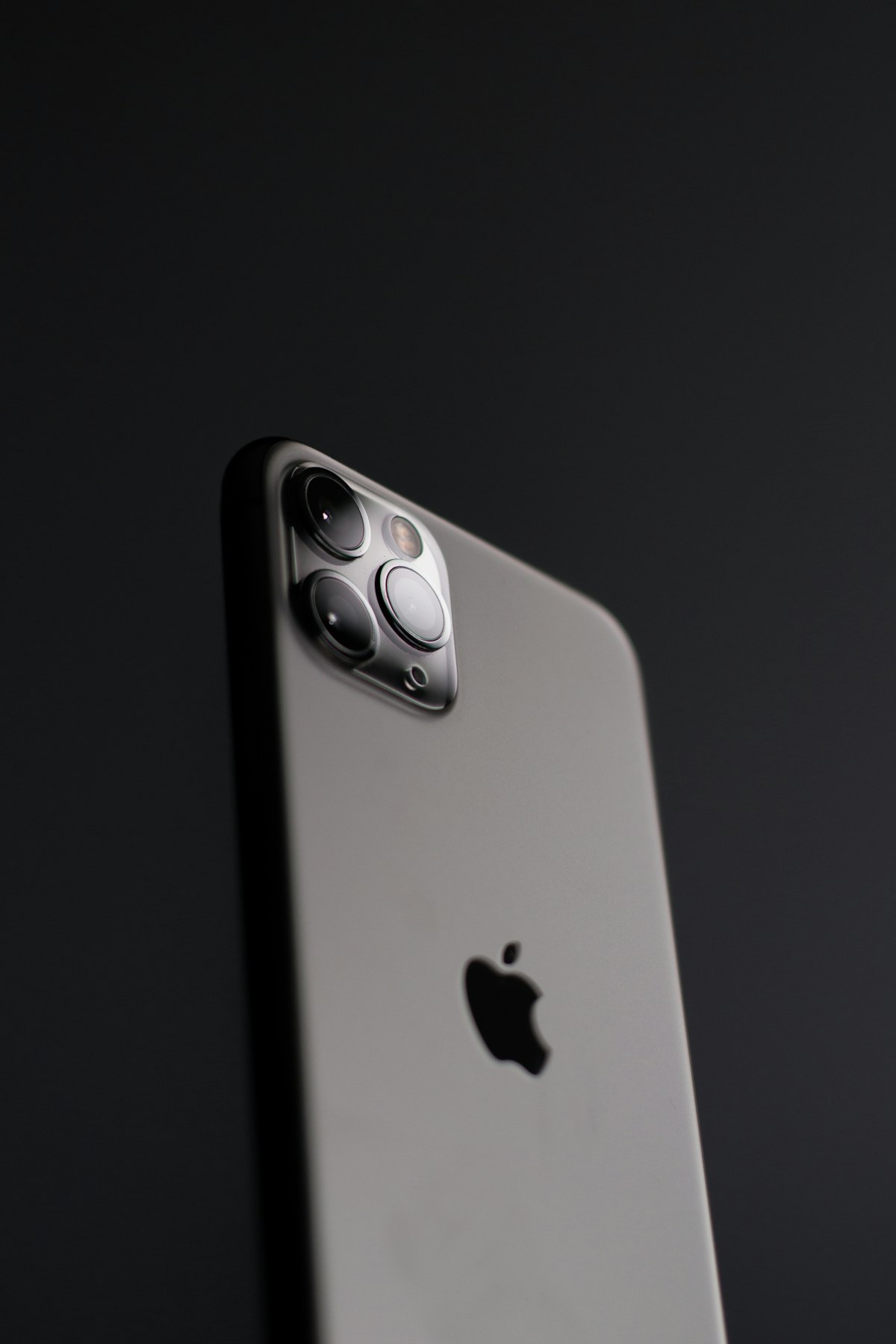
Cupertino engineers reveal how private cloud compute and neural silicon are converging to power latency-free context awareness on iOS.
CUPERTINO, Calif. — In a decisive maneuver aimed at establishing hardware-level dominance over the enterprise and consumer generative artificial intelligence landscape, Apple Inc. has released an exhaustive technical architectural brief detailing the inner workings of its hybrid on-device intelligence framework. Published ahead of the company’s flagship autumn hardware showcase, the disclosure outlines how custom neural silicon, local semantic indexing, and a cryptographically verified backend dubbed Private Cloud Compute (PCC) converge to execute real-time context processing across hundreds of millions of consumer endpoints.
The blueprint represents the culmination of a multi-year engineering pivot orchestrated by Craig Federighi, Senior Vice President of Software Engineering, Johny Srouji, Senior Vice President of Hardware Technologies, and John Giannandrea, Senior Vice President of Machine Learning and AI Strategy. As consumer electronics manufacturers face mounting skepticism regarding the latency, cost, and privacy liabilities of pure cloud-hosted Large Language Models (LLMs), Apple’s architectural revelation has sent shockwaves through Silicon Valley and Wall Street alike, reframing the smartphone as a localized, latency-free cognitive engine.
The disclosure details a deliberate departure from the computational paradigms popularized by pure-play AI hyperscalers. Rather than piping unencrypted user data to multi-tenant cloud clusters, Apple is positioning a hardware-enforced, vertically integrated split-execution model as the definitive benchmark for edge computing in the generative era.
Technical Mechanics & Engineering Breakdown
At the foundation of Apple's intelligence deployment is a bifurcated compute engine governed by dynamic workload orchestration. The edge component relies on a highly optimized, ~3-billion-parameter generative foundation model running natively on the device’s Neural Engine. Apple’s silicon teams have implemented advanced 4-bit and 2-bit mixed-precision quantization techniques, shrinking the model’s memory footprint to fit within unified memory architectures (UMA) running at memory bandwidths exceeding 100 GB/s on modern A-series and M-series chips. This on-device model operates within a dedicated system partition, guaranteeing sub-100-millisecond inference times for conversational parsing, contextual synthesis, and intent classification without draining battery reserves.
Driving on-device context awareness is a localized Semantic Index—an embedded vector database operating entirely within the operating system’s secure partition. This index continuously parses, vectorizes, and correlates unstructured signals across native applications—such as Messages, Mail, Calendar, and Photos—via Apple's App Intents framework. By indexing user semantics locally, the operating system can inject deep personal context into model prompts without transmitting raw personal data off the physical silicon.
When a user query exceeds local parameter thresholds or requires intensive reasoning, the OS dynamically offloads the task to Private Cloud Compute (PCC). Engineered specifically on custom Apple Silicon server clusters utilizing M-series Ultra processors, PCC utilizes a stripped-down, security-hardened Darwin kernel. The security protocols governing PCC represent a breakthrough in confidential computing:
1. **Cryptographic Attestation:** Client devices will not transmit an inference payload unless the target cloud node proves, via hardware-level attestation, that it is running an authentic, cryptographically signed software image.
2. **Zero-Retention Ephemerality:** PCC nodes operate entirely in volatile memory without persistent disk storage; data is purged the millisecond inference concludes.
3. **Public Inspectability:** Apple has committed to publishing every PCC production build's cryptographic measurements in a transparent append-only log, enabling independent security researchers to inspect and verify the code running on cloud nodes using Virtual Research Environments (VRE).
Wall Street, Venture Capital & Financial Ramifications
Apple’s technical preview carries profound implications for public equity markets and enterprise software valuations. Equity analysts at institutions including Morgan Stanley, Goldman Sachs, and Wedbush Securities view the architecture as the primary technical catalyst underpinning a multi-year iPhone upgrade supercycle. With hardware requirements restricting on-device foundation models to the iPhone 15 Pro and the upcoming A18-powered product lines, an estimated 800 million legacy iPhone users represent an immediate addressable upgrade base.
From a capital allocation perspective, Apple’s hybrid split provides a structural margin advantage over hyperscale rivals. By offloading an estimated 70% to 80% of routine model inferences to client-side silicon, Apple avoids the crushing capital expenditure (CapEx) burdens currently squeezing margins at Microsoft, Google, and Meta, who collectively deploy tens of billions of dollars quarterly on centralized server infrastructure. Apple’s server costs scale sub-linearly relative to its active device footprint, preserving the company’s coveted 45%+ gross margin profile.
Conversely, the venture capital ecosystem faces immediate portfolio disruption. Scores of early-stage startups that built single-feature consumer wrappers around centralized LLM APIs—such as calendar assistants, text summarizers, and inbox managers—now face structural obsolescence. Venture funding is pivoting rapidly toward edge-native infrastructure, specialized Small Language Model (SLM) optimization tooling, and vertical enterprise integrations that can interface securely with Apple's localized semantic APIs.
The Competitive Battlefield
Apple’s architectural deployment reshapes the competitive dynamics between Big Tech heavyweights, accelerating the battle between hardware-integrated intelligence and distributed cloud ecosystems.
Alphabet Inc. finds itself under intense strategic pressure. While Google’s Gemini Nano represents a capable on-device model on Pixel devices, the broader Android ecosystem remains hamstrung by severe hardware fragmentation across original equipment manufacturers (OEMs) like Samsung and Xiaomi. The lack of uniform NPU acceleration and memory baselines across budget and mid-tier Android devices prevents Google from enforcing a standardized, privacy-centric computing model at Apple's scale.
Microsoft, despite its early lead via its OpenAI partnership and Copilot+ PC initiative, lacks a proprietary mobile platform, leaving it dependent on Qualcomm’s Snapdragon X Elite hardware in the desktop space. Furthermore, Apple’s modular approach—which treats external hyperscale models like OpenAI’s ChatGPT purely as an optional, sandboxed fallback for generalized world-knowledge queries—relegates third-party AI labs to commoditized utility providers while Apple retains exclusive dominion over high-value personal user context.
Federal Regulatory Scrutiny, Civil Rights & Policy
The intersection of deep contextual data indexing and platform dominance is already attracting the attention of regulatory bodies across Washington, Brussels, and London. The Department of Justice (DOJ), currently pursuing expansive antitrust litigation against Apple over its mobile ecosystem, is monitoring whether the deep integration of Apple’s proprietary foundation models creates anti-competitive hurdles for third-party AI developers seeking access to low-level NPU pipelines.
In the European Union, the European Commission is assessing whether Apple's localized semantic index and Private Cloud Compute satisfy the interoperability and contestability mandates of the Digital Markets Act (DMA). Apple has already signaled that compliance friction could delay specific intelligence features within the EU, citing concerns that DMA Article 6(7)—which mandates interoperability with hardware and software features—could force the company to compromise the end-to-end cryptographic boundaries of its Private Cloud Compute architecture.
Civil liberties and privacy advocacy groups have cautiously praised the zero-retention cryptographic attestation of PCC, noting that it establishes a progressive standard for enterprise data residency and Fourth Amendment protections against warrantless cloud data seizures. However, federal cybersecurity agencies, including CISA, are expected to scrutinize the attestation mechanisms to ensure zero-day vulnerabilities in the Darwin kernel cannot lead to local vector index extraction.
Strategic Outlook & What Lies Ahead
Over the next 12 to 24 months, the competitive center of gravity in consumer technology will pivot decisively toward on-device inference efficiency. Apple’s long-term roadmap includes transitioning its next-generation silicon architectures to TSMC’s 2-nanometer (N2) node, an advancement that will unlock enough transistor density to support 7-to-10-billion parameter models running locally at zero marginal latency.
As on-device intelligence matures from basic text processing to cross-modal, agentic execution, software engineering paradigms will shift fundamentally. Software developers will design mobile applications not around traditional user interface clicks, but around vector-accessible App Intents designed to be autonomously invoked by on-device agents. By securing the silicon-to-cloud infrastructure, Apple has not merely previewed an operating system upgrade—it has established the technical architecture that will govern personal computing for the next decade.