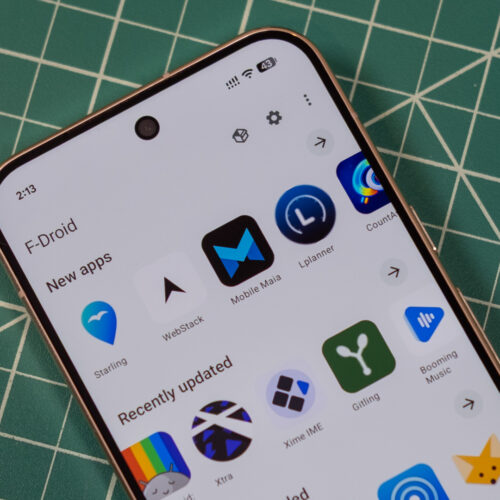
The community-driven open-source Android app repository has rolled out F-Droid 2.0, its first comprehensive visual and architectural redesign in ten years. Built from scratch in Kotlin Compose, the update modernizes user interface standards while optimizing app discovery and overcoming traditional sideloading roadblocks.
A Decade in the Making: F-Droid 2.0 Rebuilt From the Ground Up
Virtually every mainstream Android device comes preloaded with the Google Play Store, creating a deeply entrenched duopoly in mobile software distribution. However, alternative ecosystems have long persisted for power users, developers, and privacy advocates seeking transparency. Prominent among them is F-Droid, which bills itself as a community-driven repository exclusively dedicated to free and open-source Android applications. Despite its critical role in the alternative mobile landscape, its official client application went an astonishing ten years without a major structural update. That era of stagnation has finally come to a close.
After a multiyear engineering effort by the platform's core contributors, the organization has officially announced the rollout of F-Droid 2.0. The new client was redesigned entirely from scratch using Kotlin Compose, which has firmly established itself as the modern standard for Android application development. This architectural shift ensures that the store runs with significantly improved responsiveness and smooth rendering. Furthermore, the modern codebase incorporates optional support for Android's dynamic Material theming, aligning the open-source client with contemporary aesthetic expectations set by mainstream mobile operating systems.
The user interface has also undergone a rigorous cleaning process, making the most vital functions much easier for everyday users to access while tucking secondary options neatly away into overflow menus. While the visual refresh makes the platform look considerably more polished, project maintainers emphasize that the update's true mandate was to fundamentally improve how users find and install software. When F-Droid first debuted years ago, its repository contained a relatively modest selection of titles. Today, the catalog spans thousands of independent, open-source packages, necessitating an infrastructure capable of handling vastly more complex discovery tasks.
Advanced Discovery and Privacy-First Catalog Architecture
Unlike dominant commercial storefronts like the Google Play Store or Apple's App Store, F-Droid operates on a strict privacy-first ethos. The platform does not track user taps, search queries, or installation histories to serve targeted advertisements, behavioral nudges, or algorithmic suggestions. Instead, its core mission remains utilitarian: helping users locate desired software efficiently and then immediately stepping out of the way. This philosophy shapes how the newly redesigned catalog is organized, presenting information cleanly without commercial clutter or monetization distractions.
To accommodate the massive expansion of its software library, F-Droid 2.0 introduces a vastly expanded taxonomy. Users can now drill down through granular, specialized niches that cater to security-conscious consumers, including dedicated categories for firewalls, password managers, and virtual private networks (VPNs). All of these specialized groups are readily accessible within a revamped search tab, complemented by higher-level categorical overviews featured prominently on the main Discover page. This hierarchical restructuring transforms the browsing experience from a basic directory into a sophisticated software repository.
Beyond categorical browsing, the search functionality itself has received a major underlying upgrade. When searching for specific tools or utilities, F-Droid 2.0 is now capable of returning relevant results based on detailed app descriptions rather than strictly matching application names. This semantic enhancement drastically improves discoverability, allowing users to find specialized tools even if they do not know the exact nomenclature used by the developer. By combining advanced textual indexing with a clean, ad-free interface, the platform bridges the gap between open-source utility and polished user experience.
Sideloading Friction Reduced via Google's Pre-Approval API
Navigating the installation of third-party software on Android has historically involved negotiating various security warnings and system prompts. For years, Google has implemented deliberate roadblocks for sideloaded applications, citing valid cybersecurity and malware mitigation implications - a rationale that also underpins upcoming platform developer verification systems. For users operating outside the walled garden, downloading, verifying, and executing packages has traditionally required navigating multiple dialogue boxes and confirming intimidating system warnings.
For now at least, F-Droid 2.0 dramatically simplifies this installation workflow by leveraging Google's pre-approval API. Instead of the legacy process - which required downloading an APK file, manually opening it, and confirming a daunting system sideloading warning - users can now authorize installations directly within a streamlined framework. Under the new implementation, a user simply taps "Install" inside the F-Droid client, followed by a final confirmation on a streamlined system pop-up. While this still requires one more tap than a native Play Store deployment, it represents a massive quality-of-life improvement for the sideloading community.
In addition to smoother single-app deployments, the updated client introduces crucial background automation features designed to keep software current without manual intervention. F-Droid 2.0 will now automatically check for and install application updates by default, though users retain the ability to disable this behavior in settings. Furthermore, the updated architecture supports downloading and installing multiple applications simultaneously - a long-requested performance feature. Because auto-updates now handle background maintenance, developers have removed the traditional pull-to-refresh mechanism on the app screen, a design shift that the team acknowledges may take some adjustment for their dedicated user base. Manual update checks remain fully accessible via the three-dot menu for users desiring complete control.
Phased Rollout and the Future of Alternative App Stores
As the open-source community digests the magnitude of this release, deployment logistics are already underway. The brand-new F-Droid client is rolling out in stages over a two-week period to ensure server stability and catch any unforeseen edge cases. Notably, the default installer hosted directly on the primary F-Droid web domain has not yet been replaced with the 2.0 binary, serving as a transitional buffer during the early phase of the rollout.
For enthusiasts and power users eager to experience the redesigned interface immediately, the F-Droid 2.0 release is already fully accessible via the project's dedicated versions page. While the official client application is technically not the only way for users to access and install applications from the F-Droid repository, this comprehensive overhaul effectively neutralizes the primary grievance users had with the official software. With a modern Kotlin Compose framework, streamlined sideloading integration, automated background updates, and enhanced search capabilities, users now have significantly less reason to seek out third-party alternative clients.
This release arrives at a fascinating macroeconomic and regulatory juncture for mobile app ecosystems globally. With antitrust regulators scrutinizing closed platform gatekeeping and alternative app store mandates taking root in various international jurisdictions, robust and modernized open-source repositories are more relevant than ever. By proving that independent storefronts can deliver modern UI standards, smooth installation pipelines, and stringent privacy protections without relying on surveillance capitalism, F-Droid 2.0 sets a high technical benchmark for the broader open-source software community moving forward.
Reporting synthesized under Nexvoro.tech Editorial Standards • Referenced via Ars Technica
Verified Dispatch