While an $11 million XPRIZE Wildfire competition highlighted cutting-edge space-based detection and autonomous firefighting drones, judges confirmed that stopping fires remains significantly harder than spotting them. As climate disasters mount, developers continue pushing for rapid detection solutions to replace reliance on 911 calls.
By Nexvoro Tech Wire
PUBLISHED WED, SEP 23, 2026 10:29 PM UTC • 7 MIN READ
The High-Stakes Battle Against Accelerating Wildfire Disasters
As the world grapples with the growing costs and escalating devastation of worsening wildfire disasters, the global tech and engineering communities have stepped up to the front lines. The prestigious $11 million XPRIZE Wildfire competition recently brought together elite innovators to test groundbreaking technologies aimed at outsmarting nature's most destructive forces. Featuring a mix of space-based detection systems and firefighting drones, the competition showcased finalists who successfully spotted rapidly moving fires within minutes, proving that data-driven early warning systems are rapidly evolving from science fiction into operational reality.
Despite these remarkable technological strides, the grueling trials ultimately demonstrated that wildfire detection is still considerably easier than stopping fires once they ignite. Although no team managed to walk away with either of the two coveted grand prizes, the innovations displayed throughout the tournament could prove instrumental for emergency services worldwide. As climate patterns shift and rural landscapes face unprecedented ecological threats, the pressure on private industry and public safety agencies to collaborate has never been more urgent.
"We want to be able to prepare and provide tools for firefighters to really allow them to do the best job," Andrea Santy, program director of XPRIZE Wildfire, told Ars Technica during an exclusive briefing. Highlighting the physical dangers faced by emergency personnel on a daily basis, Santy emphasized the moral and operational imperative of modernizing fire response. "They're great at what they do, but it's unfair to continue to put them in harm's way when there's technology coming online that can help keep them safe, keep communities safe, and protect ecosystems."
Navigating Two Distinct Tracks: Space Detection and Autonomous Response
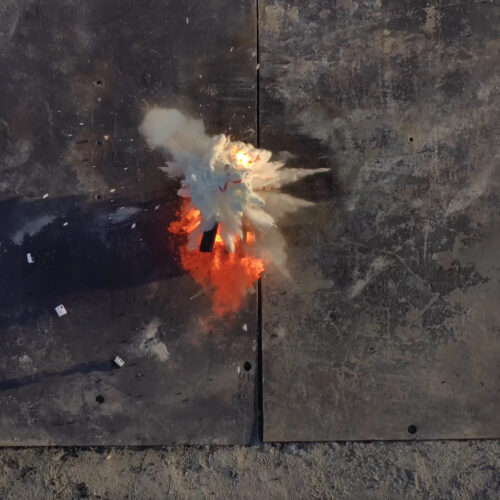
The multi-year competition was structured around two distinct, highly challenging tracks designed to test different phases of disaster mitigation. The First Prize track focused on space-based wildfire detection, challenging participating teams to accurately detect all fires across a massive swath of Australia within a grueling 10-minute window. Meanwhile, a second Autonomous Response track pushed engineers to autonomously detect and extinguish a high-risk fire located somewhere within rural Alaska while actively ignoring decoy fires - all within 10 minutes of the initial ignition.
The logistical and creative hurdles of the Autonomous Response track attracted an astonishingly diverse array of proposed technological solutions during the early stages of the competition. Over 300 teams from across the globe initially threw their hats into the ring, presenting conceptual systems that ranged from conventional aerial vehicles to highly experimental suppression mechanisms. The technical filtering process required judges to separate viable engineering marvels from impractical concepts.
"At the very beginning, we saw things like sound being able to put out a fire, lasers, and all sorts of robotics like robotic dogs," Santy told Ars. "We had ground systems and aerial systems." However, as the XPRIZE Wildfire judges rigorously focused on the most practical, scalable solutions for finding and suppressing a blaze within a strict 10-minute threshold, they systematically weeded out technologies that faced insurmountable geographic and temporal barriers.
Overhauling the 15-Minute Blind Spot in Emergency Reporting
A core objective of the XPRIZE initiative is to fundamentally disrupt how humanity discovers and reacts to sudden wildfire outbreaks. According to program leadership, traditional emergency response pipelines remain painfully slow, leaving vulnerable ecosystems and communities exposed to unchecked early-stage growth. Bridging this informational gap is viewed by market analysts and emergency management experts as the single most critical frontier in modern disaster mitigation.
"We want to be able to have technologies that can detect a fire before it's detected by anyone else," Santy explained during her interview with Ars. Providing context on current emergency response metrics, she noted a startling baseline: "A 911 call is still the most typical way that we find out about wildfires, and on average, that's going to be at least 15 minutes." Shaving critical minutes off that initial discovery window through automated intelligence is precisely what the competition sought to catalyze.
A full list of winners and official documentation from the trials can be found in the XPRIZE Wildfire press release posted on September 23. In speaking with Ars, Santy elaborated deeply on the underlying software and hardware architectures powering the winning approaches, detailing why ongoing, real-world wildfire disasters have only served to make the competition increasingly relevant to policymakers and tech investors alike.
Leveraging Next-Generation Satellite Constellations and AI
Space-based detection of wildfires has traditionally relied on piggybacking off multiple existing satellite constellations, but dedicated hardware designed specifically for spotting thermal anomalies has only just begun to come online. Highlighting the rapid commercialization of space tech, the German aerospace company OroraTech successfully launched a dedicated wildfire detection constellation of satellites in March 2025. Shortly thereafter, the prominent Google-backed FireSat program launched its own inaugural microsatellites in July 2026.
Despite these advancements, standard orbital infrastructure still presents significant operational hurdles for emergency responders. "Current satellites are not built for wildfire detection - they're built for a lot of other environmental monitoring and weather monitoring," Santy explained. "So we're always trying to look at how we take that data that's not wildfire-specific and use it for a wildfire context." This limitation explains why elite teams in the space-based detection track concentrated heavily on developing advanced AI and software layers that harness existing satellite imagery alongside diverse environmental data feeds.
"Our teams were challenged with being able to detect a fire essentially instantly and then transmit the data in a usable way so that it is intelligence to firefighters on the ground, reducing as many false positives as possible," Santy told Ars. The ultimate real-world test for these software finalists took place at the New South Wales Rural Fire Service in Australia in April 2026. While none of the competing groups fully satisfied every stringent parameter required to claim the massive $3.5 million grand prize sponsored and co-designed by the Australian-based Minderoo Foundation, several stellar performers were formally recognized, anchored by the UK-based SIRIUS Wildfire Alliance securing the first-place prize of $500,000.
Reporting synthesized under Nexvoro.tech Editorial Standards • Referenced via Ars Technica
Verified Dispatch