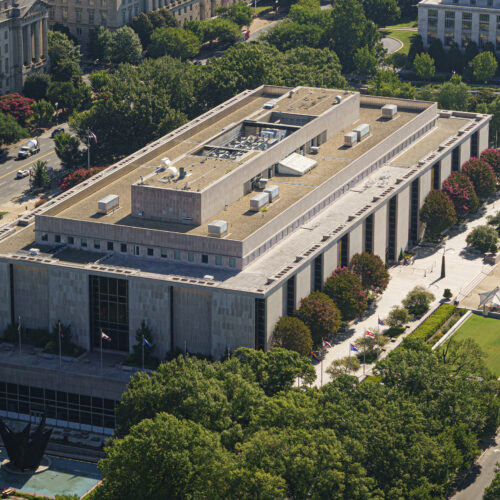
The Smithsonian Institution faces an unprecedented existential challenge as executive pressure, federal funding threats, and intense congressional scrutiny disrupt its decades-long bipartisan stewardship. The escalating conflict has already prompted the resignation of Secretary Lonnie Bunch.
The Benjamin Franklin Exhibit and the Roots of Controversy
In November 2021, the Smithsonian's National Museum of American History opened an exhibit entitled "The Electric Dr. Franklin," designed to showcase Benjamin Franklin's pioneering contributions to electrical science. However, the display also confronted visitors with the Founding Father's complex history regarding human bondage, explaining that prior to becoming an abolitionist, he had enslaved people in his household. The interpretive panels declared that "Benjamin Franklin's remarkable scientific accomplishments were, in part, enabled by slavery."
The exhibit further featured eye-catching historical conjectures, suggesting that Franklin may have used enslaved individuals in his electrical research. "Franklin wrote about experiments in which he took shocks and used family and friends in these ways, although he seldom identified who in particular assisted him," stated the exhibit, which closed in 2025 but remains accessible online. It added that "indentured servants and enslaved people in his household could also have been used, although we may never know for certain."
This provocative depiction - proposing that one of America's most revered Founding Fathers subjected people held against their will to potentially painful electrical shocks - quickly became a lightning rod for criticism. The display was highlighted as a primary example in a blistering 162-page White House report released in July. The federal report argued that the museum had fallen victim to an "ideological capture" that "moved the Museum's mission away from straightforward historical education and scholarship toward an extreme political activism that seeks to transform our country."
Bipartisan Sanctuary Breached by Executive Action
For decades, the Smithsonian Institution has drawn roughly 15 million visitors every year across its network of 21 museums, representing a cultural bounty with no real global peer. Throughout periods of rising political polarization and intense culture wars, the institution managed to stay mostly above the political fray. While there were occasional historical exceptions - such as the fierce public uproar over the National Air and Space Museum's planned 1995 exhibit of the Enola Gay, the B-29 bomber that dropped the first atomic bomb on Hiroshima - the entity largely maintained steadfast bipartisan support as the premier guardian of American history, ingenuity, and natural heritage.
That institutional exceptionalism, however, is now imperiled as never before under intense pressure from the Trump administration. In March 2025, President Donald Trump signed an executive order declaring that the Smithsonian had succumbed to a "divisive, race-centered ideology." This was followed on July 4 - timed deliberately to coincide with the 250th anniversary of the Declaration of Independence - by the release of the comprehensive White House report detailing widespread ideological drift across the institution's exhibits and programs.
Later in July, the conflict escalated to Capitol Hill where two House committees held back-to-back hearings scrutinizing the administration's findings. Republican members took turns lambasting the museum's director, Anthea Hartig, forcing her to defend specific curatorial decisions. Lawmakers interrogated her over controversial exhibit items, including a "chrome and rubber crotch harness" designed for sadomasochistic sex. Amid these hearings, President Trump signed another executive order instructing the Department of the Interior to erect signs outside the museum warning visitors about the alleged "ideological capture" on display inside.
Financial Pressures and Leadership Fallout
Although the signs mandated by the executive order have yet to be physically installed, the administrative pressure has manifested heavily through financial and institutional channels. In late August, Interior Secretary Doug Burgum sent a sharp letter to the Smithsonian's Board of Regents declaring that other federal agencies "cannot in good conscience continue to support the Smithsonian under current leadership," raising serious alarms among administrators and institutional stakeholders.
Constitutionally and structurally, the Smithsonian operates independently of the executive branch. It is governed by a 17-member board led by the chief justice of the Supreme Court, alongside six members of Congress - evenly split with three from each party - serving alongside nine private citizens and the vice president of the United States. Despite this independent framework, the institution remains deeply dependent on federal backing, drawing 62% of its operating budget from the federal government and receiving more than $1 billion annually. Consequently, warnings of deep budgetary cuts from lawmakers have grown increasingly loud and credible.
The compounding political, financial, and administrative pressures ultimately reached a boiling point on September 8. Smithsonian Secretary Lonnie Bunch - noted historically as the first African American person to lead the elite institution - announced that he was stepping down from his post at age 73, explicitly remarking that "it has been stressful."
Broader Implications for Washington Cultural Institutions
Viewed from a broader macroeconomic and political vantage, the ongoing battle over the Smithsonian represents a major flashpoint in a wider campaign by the Trump administration to reshape and place its distinct stamp on prominent Washington institutions. Observers note structural parallels to other high-profile executive actions in the capital, such as the shuttering operations at the Kennedy Center and sweeping federal administrative replacements.
As the fallout from Secretary Bunch's departure reverberates through the nation's capital, the Smithsonian faces a critical juncture. The institution must navigate the delicate balance between maintaining its scholarly integrity, addressing valid congressional and executive oversight, and securing the vital federal appropriations necessary to maintain its vast museum network for millions of annual domestic and international visitors.
Reporting synthesized under Nexvoro.tech Editorial Standards • Referenced via Ars Technica
Verified Dispatch