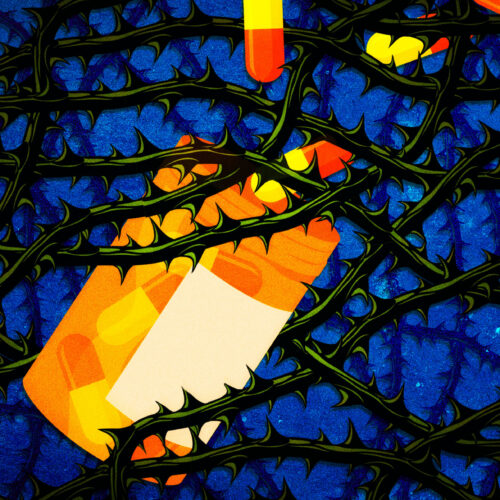
A landmark study published in JAMA reveals that pharmaceutical companies have drastically increased nonprimary drug patents since 1990, extending market protection periods from two to over six years. This strategic accumulation of add-on patents creates formidable barriers for affordable generics, driving skyrocketing prescription costs across the United States.
By Nexvoro Tech Wire
PUBLISHED MON, SEP 28, 2026 8:38 PM UTC • 7 MIN READ
The Escalating Crisis of US Healthcare and Prescription Drug Costs
The cost of healthcare in general stands as a debilitating, pre-existing condition for American consumers and businesses alike. However, the persistently high prices of prescription drugs usually stand out as a primary pain point for patients navigating the medical system. While there are many insidious reasons why Americans pay more - often far more - for their life-saving medicines than people in peer countries, exploitation of the United States patent system is an undeniably obvious catalyst.
A groundbreaking study published Monday in JAMA highlights just how dramatically patent exploitation has grown over the last three decades. In that time, researchers found that the number of patents protecting small-molecule drugs has more than tripled. The average jumped from 2.1 patents per drug approved in 1990 to an astonishing 6.9 patents for those approved in 2019, fundamentally altering the pharmaceutical competitive landscape.
Anatomy of a Patent Thicket: Nonprimary Patents Surge
Most of the observed growth occurred within "nonprimary" patents - legal protections that generally bear no direct relation to a drug's core active ingredient. Instead, these patents are secured for minor tweaks to a drug's nonactive ingredients, updates to the way the drug is administered, or the industrial design of specialty delivery devices, such as automated injectors. Together, these extra patents on an individual medication construct what legal experts call a "patent thicket."
This deliberate web of legal protections delays the commercial release of affordable generics onto the market, keeping prescription drug prices artificially inflated for much longer periods without delivering any actual clinical advancements. The study - led by S. Sean Tu, an esteemed expert in drug and patent law at the University of Alabama - found that this proliferation of patents extended the window in which a drug remained under exclusive protection from an average of just two years in 1990 to an average of 6.1 years by 2019.
Economic Realities and the Multiplied Burden on Consumers
"Because patent protection typically determines how long brand-name firms can charge monopoly prices, the rapid growth of nonprimary patents may contribute to limited price competition that benefits patients and the health care system by helping avoid unnecessary spending," Tu and his research colleagues write in their comprehensive analysis. Between 1990 and 2019, American patients and payers watched spending on prescription drugs soar to unprecedented heights.
According to a Peterson-KFF analysis, the per capita, inflation-adjusted spending on prescription drugs in the United States sat at $291 in 1990. By 2019, that annual figure had skyrocketed to $1,084 per person. Compounding this financial pressure, an analysis published earlier this year by the Commonwealth Fund revealed that Americans spent nearly twice as much on prescription medications as the average spending observed across other high-income industrialized nations.
Methodological Insights and Future Patent Extensions
For the study, Tu and his research team utilized publicly available data to examine small-molecule drugs approved by the Food and Drug Administration alongside the various patents filed on those specific chemical entities. Other categories of approved therapeutics, such as complex biologics, are not systematically cataloged by the FDA in a publicly accessible database, and were thus excluded from this particular review. The researchers meticulously categorized the types of patents associated with each drug and evaluated how they affected the statutory term during which the drug remained under active patent.
Focusing strictly on drugs granted FDA approval between 1990 and 2019, the team incorporated a five-year follow-up period for tracking subsequent patent filings. Even with this methodological framework, the authors note that their findings likely underestimate the current, contemporary sizes of patent thickets. Modern corporate patent activity is now extending up to nine years after initial FDA approval, meaning the barriers to generic market entry continue to expand.
Structural Shifts and Proposed Policy Reforms
Throughout the study period, "primary patents" on drugs - those usually related directly to the primary active pharmaceutical ingredient - changed very little in frequency. Conversely, nonprimary patents more than tripled in volume. Overall, the FDA approved 1,981 small-molecule drugs between 1990 and 2019, accumulating a staggering 10,940 total patents across those approvals, with nonprimary patents accounting for an overwhelming 84 percent of the total.
A key limitation acknowledged by the study is that it did not look directly at immediate delays to the commercial availability of generic drugs, though such delays are logically linked to patent thicket growth. While drug manufacturers frequently argue that additional patents do not delay generic market entry, the historical examples cited in those corporate arguments typically involve drugs approved before 2010, when patent thicket accumulation was significantly lower than it is today. In response to these findings, the authors call for aggressive regulatory reforms - including heightened scrutiny by the US Patent and Trademark Office and new legislative measures to limit minor add-on patents - to dismantle patent thickets and restore true price competition.
Reporting synthesized under Nexvoro.tech Editorial Standards • Referenced via Ars Technica
Verified Dispatch