At its annual Snapdragon Summit, chip giant Qualcomm launched two flagship smartphone processors equipped to run advanced local AI models, advanced camera controls, and high-performance audio processing. The hardware rollout underscores the industry's deepening race to integrate sophisticated artificial intelligence directly into consumer handsets.
By Nexvoro Tech Wire
PUBLISHED TUE, SEP 22, 2026 8:05 PM UTC • 6 MIN READ
Unveiling Next-Gen Processing Power
At its annual Snapdragon Summit, tech titan Qualcomm officially announced two flagship smartphone processors: the Snapdragon 8 Elite Gen 6 and the Snapdragon 8 Elite Extreme Gen 6. Engineered with a sharp focus on facilitating high-performance, AI-driven features, these cutting-edge chips represent a significant evolutionary step for mobile architecture. As hardware manufacturers vie for dominance in the consumer tech ecosystem, Qualcomm's latest silicon aims to redefine what handheld devices can achieve locally without relying exclusively on cloud infrastructure.
The new processors are equipped with advanced sensing hubs capable of executing small machine learning models of up to 200 million parameters. This architectural enhancement allows modern smartphones to run a personal scribe locally while accurately differentiating between multiple speakers in real time. Furthermore, the system builds an intuitive memory framework based on individual user habits, enabling smarter suggestions for automating routine daily tasks and streamlining user workflows.
Demonstrating the practical capabilities of the hardware, Qualcomm highlighted that the platform is powerful enough to run a complete voice-in and voice-out agent natively through the new chip. This leap in processing efficiency reduces latency and enhances user privacy by keeping conversational data on the device. Industry watchers note that this capability sets a new benchmark for on-device assistant interactions across the mobile landscape.
Architectural Breakthroughs and Local MoE Models
Under the hood, the standard Snapdragon 8 Elite Gen 6 features a newly designed accelerator element engineered specifically to execute complex machine learning models with heightened operational efficiency. Meanwhile, the high-end Extreme variant pushes the envelope further by supporting a staggering 30 billion parameter mixture-of-experts (MoE) model locally. By utilizing an MoE architecture, the overall model size reaches 30 billion parameters, yet the system dynamically activates only a targeted subset of those parameters for any given specific task.
To contextualize this computational milestone, Apple introduced a 20-billion-parameter mixture-of-experts model during its Worldwide Developer Conference (WWDC) in June, representing the zenith of its third-generation foundation models. Qualcomm's ability to support a 30B MoE model directly on a mobile chipset highlights a dramatic compression and optimization triumph. This capability bridges the historical gap between heavyweight enterprise hardware and consumer-grade mobile form factors.
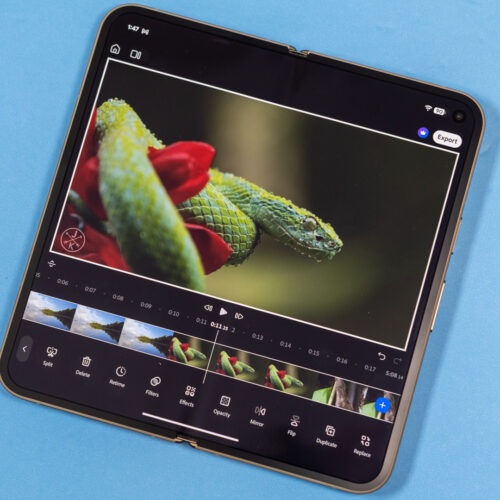
Beyond pure artificial intelligence processing, the newly introduced Qualcomm CPU delivers meticulous pixel-level control for smartphone cameras, facilitating professional-grade photography experiences alongside enhanced optical stabilization and motion understanding. Specifically, the Extreme edition provides robust support for video recording at 8K resolution at 60 frames per second, as well as ultra-HD slow-motion capture at 4K resolution and 240 frames per second.
Advanced Multimedia and Audio Engineering
In addition to its raw computational and photographic prowess, the Snapdragon 8 Elite Extreme Gen 6 enables the rollout of Qualcomm's new Advanced Professional Video (APV) codec. This codec is tailored specifically for creators and professionals demanding studio-grade recording capabilities directly from a pocket-sized device. The combination of high-frame-rate ultra-HD capture and the APV codec solidifies the chipset's appeal to mobile content creators and digital media professionals.
Audio fidelity has also received a substantial upgrade through deep machine learning integration. Both the standard and Extreme chips utilize advanced AI algorithms to dynamically boost human vocals while actively suppressing background environmental noise. Complementing this feature is Qualcomm's newly developed voice bubble technology, which intelligently isolates the primary user's voice during telephone and VoIP calls, ensuring crystal-clear communication regardless of surroundings.
Hardware partnerships were immediate at the summit, with Motorola announcing its upcoming Motorola Signature 27 smartphone. Powered by the Snapdragon 8 Elite Extreme Gen 6, the device is slated for general commercial availability later this year. This launch anchors Qualcomm's hardware into a competitive tier of flagship mobile offerings designed to capitalize on the burgeoning consumer demand for native AI functionalities.
The Broader Ecosystem and Industry Outlook
Qualcomm's aggressive hardware push aligns with a broader industry conviction that smartphones will remain the primary vehicle for consumer artificial intelligence adoption, outpacing dedicated standalone AI gadgets. Industry figures have frequently pointed to this trajectory; Nothing co-founder Carl Pei has discussed the central role of smartphones in AI, while Apple CEO John Ternus reinforced a remarkably similar perspective during the iPhone Duo product launch earlier this month.
With Qualcomm actively collaborating on more than 40 distinct AI-enabled devices across the market, the enterprise is positioning its silicon at the epicenter of the mobile transformation. As developers optimize software to leverage the 30B MoE capabilities and localized sensing hubs, the boundary between cloud-dependent computing and edge intelligence continues to blur. For consumers, this transition promises faster, more private, and deeply personalized technological experiences embedded directly in the devices they carry every day.
Reporting synthesized under Nexvoro.tech Editorial Standards • Referenced via TechCrunch
Verified Dispatch

.jpg)