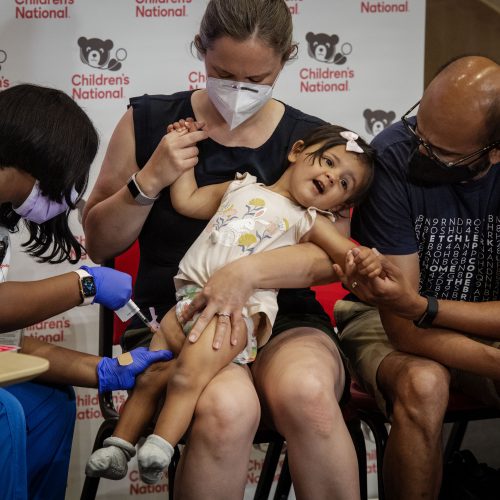
More than half of US children face immunization access uncertainty as the Department of Health and Human Services under Robert F. Kennedy Jr. unexpectedly stalls seasonal vaccine distribution. Public health experts warn the unprecedented procurement delay compromises federal safety nets and state-level universal access programs.
By Nexvoro Tech Wire
PUBLISHED THU, SEP 24, 2026 12:53 AM UTC • 7 MIN READ
Respiratory Season Looms As Federal Vaccine Procurement Stalls
As respiratory virus season draws near and vital fall vaccination drives get underway nationwide, more than half of US children are facing unexpected uncertainty over their access to this year's updated COVID-19 shot. The Centers for Disease Control and Prevention has unexpectedly delayed the distribution of these essential inoculations to a critical federal program and multiple state jurisdictions, leaving public health officials scrambling to secure adequate supplies for vulnerable populations.
Usually, the CDC would seamlessly allow states to order the newly available seasonal COVID-19 vaccines through the well-established federal Vaccine for Children (VFC) program. This vital federal initiative provides vaccines at zero cost to children who are uninsured, underinsured, Medicaid-eligible, or Indigenous people living within the United States. Approximately 52 percent of all children across the United States rely on and are eligible for vaccines through this foundational safety net program.
In addition to the core federal VFC framework, reports from The Guardian indicate that at least 11 states and one US territory operate within a universal vaccine purchase program. In these jurisdictions, health authorities buy all necessary vaccines for children - regardless of their insurance status or ability to pay - through procurement contracts otherwise designated for the VFC. The affected 11 states and one territory comprise Alaska, Connecticut, Hawaii, Maine, Massachusetts, New Hampshire, New Mexico, Rhode Island, Vermont, Washington, Wyoming, and American Samoa.
Public Health Implications And Executive Scrutiny
The administrative bottleneck has sent immediate shockwaves through regional public health departments accustomed to reliable, predictable distribution timelines ahead of the winter illness peak. Without timely shipments arriving through official federal channels, local clinics and pediatricians face severe logistical roadblocks in safeguarding their youngest patients.
Weighing in on the unprecedented administrative stall, Demetre Daskalakis, former director of the CDC's National Center for Immunization and Respiratory Diseases and current chief medical officer at the Callen-Lorde Community Health Center, issued a blunt warning to reporters. "The delay in VFC means delays in these states' ability to get vaccine for all children," Daskalakis told The Guardian, underscoring the cascading operational impacts of the federal holdup.
Responding directly to inquiries regarding the logjam, the Department of Health and Human Services (HHS) issued a formal statement to Ars Technica confirming that the "CDC has not yet finalized procurement decisions for COVID-19 vaccines through the Vaccines for Children and Section 317 programs." The department - currently led by ardent anti-vaccine activist Robert F. Kennedy Jr. - declined to answer specific questions regarding the exact rationale behind the decision delay, though the released statement heavily suggested that top administration officials were actively questioning whether young children should receive the vaccine at all.
Ideological Resistance And Historical Precedent
Underpinning the current procurement paralysis is a well-documented history of skepticism from executive leadership regarding the safety and efficacy profile of modern immunizations. The unexplained bureaucratic delay aligns seamlessly with Kennedy's long-established disdain for COVID-19 vaccines, which he has previously characterized falsely as "the deadliest vaccine ever made." Furthermore, he has repeatedly attempted to blame the inoculations for childhood mortalities, despite a complete lack of empirical scientific evidence to support such claims.
This ideological opposition is far from novel. Back in 2021, at the absolute height of the global pandemic, Kennedy formally petitioned the Food and Drug Administration to completely revoke emergency use authorization for COVID-19 vaccines and to refrain from issuing any subsequent approvals. In that petition, he falsely asserted that the "risks of serious adverse events or deaths outweigh the benefits." Instead of supporting peer-reviewed therapeutics, Kennedy's petition aggressively urged the FDA to promote the use of the anti-parasitic drug ivermectin and the anti-malaria drug hydroxychloroquine against COVID-19 - treatments that subsequent large-scale, high-quality clinical trials proved to be entirely ineffective and potentially hazardous.
Navigating Federal Guidance And Medical Consensus
The friction between federal health administration directives and institutional medical bodies has intensified over successive budget and policy cycles. Last year, Kennedy unilaterally revoked standing federal recommendations for COVID-19 vaccines for children, as well as during pregnancy. Last fall, he also dragged his feet significantly on signing off on standard CDC recommendations for the seasonal shot, creating widespread confusion among healthcare providers.
Following a federal judge's ruling that successfully reversed many of the sweeping changes Kennedy had introduced to federal vaccine guidance, the current official CDC vaccine schedule for children dictates that healthy youths aged 6 months to 17 years can receive the vaccine through "shared clinical decision-making." Meanwhile, the guidelines continue to explicitly recommend the shot for children who are moderately or severely immunocompromised.
This federal posture sharply contrasts with the unified positions adopted by leading medical and pediatric organizations for the current immunization cycle. Earlier this month, the comprehensive 2026-2027 respiratory virus immunization recommendations and the underlying scientific evidence base were released in a collaborative, cross-industry effort spearheaded by the American Medical Association, the Vaccine Integrity Project, and the American Academy of Pediatrics (AAP).
Reporting synthesized under Nexvoro.tech Editorial Standards • Referenced via Ars Technica
Verified Dispatch