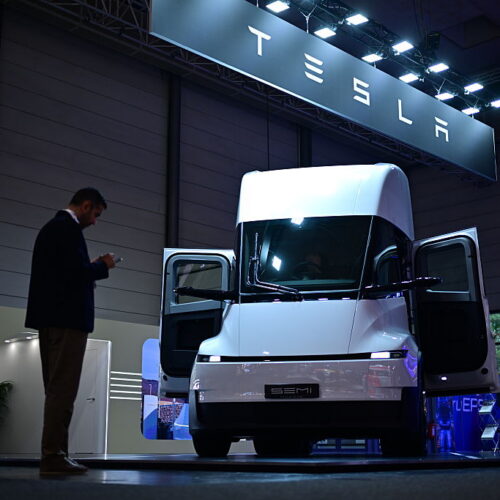
As Tesla rolls out its long-awaited 500-mile electric Semi, fleet operators and logistics leaders face a stark reality: the foundational highway charging infrastructure required to power heavy-duty freight across America remains severely underdeveloped. While the engineering milestone is clear, the path to widespread commercial adoption is blocked by complex grid and real estate challenges.
By Nexvoro Tech Wire
PUBLISHED SAT, SEP 26, 2026 5:11 PM UTC • 6 MIN READ
The 500-Mile Milestone Meets Hard Commercial Realities
Tesla's long-anticipated entry into the commercial trucking sector has officially arrived, bringing with it the promise of a 500-mile driving range on a single charge for Class 8 heavy-duty vehicles. This technical achievement addresses one of the primary historical bottlenecks of battery-electric freight transportation: the inability to travel long distances between terminal hubs without constant interruptions. Industry analysts and prospective fleet buyers have monitored the development closely, recognizing that a true long-haul electric option could fundamentally disrupt the multi-billion-dollar logistics and freight industry.
However, the rollout of the Semi occurs against a backdrop of deep skepticism regarding how these massive commercial vehicles will actually operate at scale across the American highway system. While the truck itself delivers on its promised specifications, the ecosystem required to support it is lagging far behind factory production schedules. Fleet managers are forced to weigh the undeniable appeal of reduced carbon emissions and lower long-term operating costs against the immediate logistical nightmare of managing routes around severe charging deserts.
The Infrastructure Deficit on America's Highways
The most glaring hurdle facing the commercialization of electric heavy-duty transport is the absolute scarcity of ultra-high-power charging infrastructure along major freight corridors. Passenger car superchargers, which are increasingly common across suburban and metropolitan landscapes, are wholly inadequate for the gargantuan energy demands of a Class 8 Semi. Powering a commercial truck carrying an 80,000-pound gross combination weight requires dedicated megawatt-level charging stations capable of delivering unprecedented electrical loads in a matter of minutes.
Building out this specialized network is not merely a matter of installing hardware; it requires sweeping overhauls of local electrical grids, securing massive parcels of industrial real estate, and navigating complex bureaucratic permitting processes. Utility companies and state governments are struggling to keep pace with the localized power demands that a fleet of charging Semis would introduce. Without a coordinated national strategy to fund and construct heavy-duty charging corridors, early adopters are effectively restricted to operating within captive, closed-loop routes between specific warehouses and distribution centers.
Fleet Operations and the Total Cost of Ownership Equation
For major logistics players and enterprise shipping departments, the decision to transition to an electric fleet rests entirely on the cold calculus of the total cost of ownership (TCO). Fuel savings and reduced mechanical maintenance - thanks to fewer moving parts compared to traditional diesel internal combustion engines - represent powerful financial incentives. Yet, the initial capital expenditure required to purchase electric semis, coupled with the potential expense of installing private depot chargers, creates a steep barrier to entry for many mid-sized carriers.
Furthermore, downtime in the freight industry translates directly to lost revenue. If a truck driver is forced to wait hours for an available megawatt charger, or detour significantly off an optimal route to find a working station, the economic efficiencies of electrification evaporate rapidly. Logistics executives emphasize that until public and private charging networks achieve the same ubiquity and reliability as diesel fuel stops, electric semi-trucks will remain tethered to predictable, repetitive regional routes rather than true cross-country long-haul operations.
The Road Ahead for Heavy-Duty Electrification
Overcoming these formidable infrastructure gaps will require unprecedented collaboration between automotive manufacturers, energy providers, federal regulators, and private logistics firms. Initiatives to establish regional freight charging corridors are underway in several states, but the pace of deployment must accelerate dramatically to support ambitious corporate and governmental carbon reduction targets. The technology to move heavy freight electrically is no longer theoretical; it is rolling off assembly lines today.
Ultimately, Tesla's Semi serves as both a pioneering product and an urgent stress test for the American energy grid. As these trucks log their first millions of commercial miles, they will expose every remaining weakness in the nation's transportation infrastructure. How quickly policymakers and utility operators respond to these systemic pressures will determine whether the electric trucking revolution fulfills its immense promise or stalls out on the shoulder of the highway.
Reporting synthesized under Nexvoro.tech Editorial Standards • Referenced via Ars Technica
Verified Dispatch