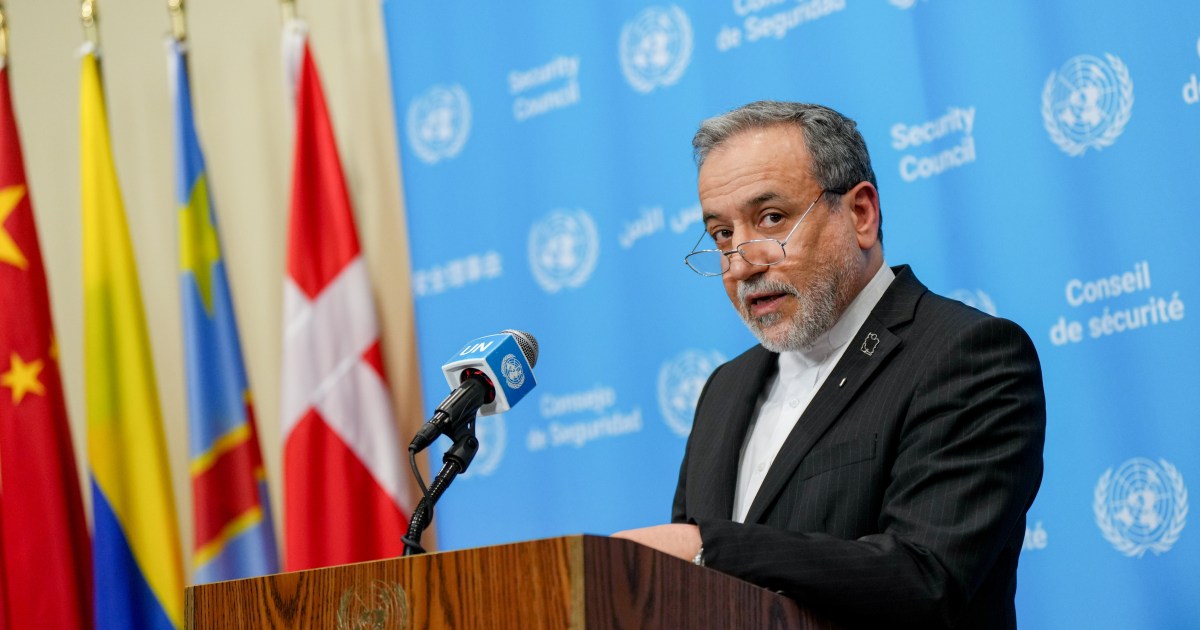
President Donald Trump announced Saturday that he has rejected a fresh Iranian proposal to reopen the critical Strait of Hormuz, asserting that the U.S. blockade has left Tehran financially crippled. The rejection follows indirect negotiations facilitated by Qatar on the sidelines of the United Nations General Assembly.
By Nexvoro Tech Wire
PUBLISHED SAT, SEP 26, 2026 5:10 PM UTC • 6 MIN READ
Diplomatic Impasse Unfolds at the United Nations General Assembly
Indirect diplomatic talks between the United States and Iran on the sidelines of this week's United Nations General Assembly in New York have hit a major roadblock. President Donald Trump announced on Saturday that he has formally rejected an Iranian proposal aimed at reopening the vital Strait of Hormuz. The diplomatic maneuvering comes as international stakeholders watch the crucial waterway, through which roughly 20 percent of the world's oil previously flowed before the current conflict began, sending severe shock waves through the global economy.
Speaking to reporters on the White House lawn just before boarding Marine One, President Trump did not mince words regarding his decision to turn down the overture. The Wall Street Journal first broke the news that the White House had declined Iran's offer to revive a previous ceasefire framework alongside the commercial reopening of the trade route. Trump underscored that Tehran's economic pressures are entirely self-inflicted, stemming directly from their initial tactical choice to restrict passage through the strait.
The White House Perspective: Economic Pressure and Military Blockade
Elaborating on the tactical calculus behind his administration's refusal, President Trump emphasized the overwhelming leverage currently held by American armed forces. "I rejected their deal. They want to make a deal where they open the strait immediately because they're losing so badly," Trump stated to reporters on Saturday morning. He added that Tehran's leadership "outsmarted themselves" by attempting to leverage global energy supplies before encountering an unprecedented counter-strategy.
"What they wanted is to immediately open the Hormuz Strait. You know why? Because they're dying. You know why they're dying? Because they have no money coming in because they get their money from the Hormuz Strait," Trump continued, highlighting the efficacy of what he termed "the greatest blockade ever in military history." Reinforcing this posture on social media, Trump posted an image early Saturday to Truth Social labeling the contested waterway the "Trump Strait," while noting earlier in the week that he remains undecided between pursuing total annihilation or a negotiated settlement.
Tehran's Seven-Day Plan and Mediator Channels
Prior to the U.S. rejection, Iranian leadership laid out a structured mechanism for restoring maritime commerce through intermediaries. Iranian Foreign Minister Abbas Araghchi stated Friday that the ultimate choice "rests with the United States," asserting that normal maritime passage could resume within a week. According to Araghchi, a "concrete seven-day plan" was successfully transmitted to U.S. officials through Qatari mediators, contingent upon Washington accepting terms previously established in a collapsed June memorandum of understanding.
That temporary ceasefire agreement, signed in June, deteriorated rapidly within days following a renewed exchange of military strikes. Among the core requirements stipulated in Tehran's latest proposal is American acceptance of a specific maritime transit route through the Strait of Hormuz that was mutually agreed upon by Iran and Oman, as detailed by Araghchi earlier in the week. Meanwhile, Iranian President Masoud Pezeshkian maintained in an interview with Al Jazeera that resolving the crisis remains viable via negotiations rather than force, though he explicitly noted a deep-seated lack of trust toward Washington.
Strategic Posturing and Global Energy Markets
Despite mounting international anxiety over energy supplies, senior American administration officials have signaled that the United States is operating from a position of profound operational strength. A U.S. official confirmed Friday that while positive and constructive discussions continue via third-party mediators, Washington is under no operational or political pressure to rush an agreement. Emphasizing the security of the current maritime corridor, the official noted that nearly 40 million barrels of oil successfully transited the strait over the preceding 48-hour window.
President Trump has repeatedly reiterated that the primary strategic objective of U.S. military actions in the region is to definitively prevent Iran from developing a nuclear weapon. With President Pezeshkian recently suggesting a willingness to finalize an accord before American voters head to the polls this November, the standoff between Washington and Tehran continues to balance delicately between high-stakes energy geopolitics and overarching national security imperatives.
Reporting synthesized under Nexvoro.tech Editorial Standards • Referenced via Google News US Nation & Law
Verified Dispatch