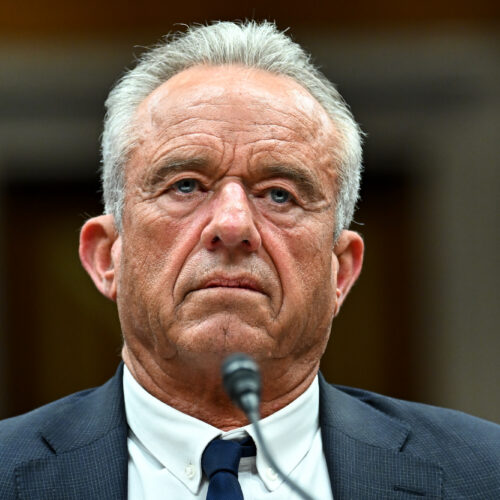
State health departments can finally order the 2026-2027 season's COVID-19 vaccines through a federal immunization program following an unexplained monthlong delay. The holdup has intensified federal scrutiny regarding potential interference by health officials under Health Secretary Robert F. Kennedy Jr.
By Nexvoro Tech Wire
PUBLISHED FRI, SEP 25, 2026 1:05 AM UTC • 6 MIN READ
Federal Ordering Program Unlocked After Significant Delay
Following an unexplained, nearly monthlong delay, state health departments are now able to order this season's COVID-19 vaccines through a vital federal program providing free immunizations to low-income children. Despite the vaccines receiving Food and Drug Administration approval in late August, the Centers for Disease Control and Prevention had still not opened ordering for the 2026-2027 immunizations as of Wednesday.
The Department of Health and Human Services initially told reporters that the CDC had not yet finalized procurement decisions for the shots. The department's official statement further suggested that federal leadership was actively questioning whether children should receive the vaccines at all, citing a commitment to responsible stewardship of taxpayer resources and ensuring that federally funded programs distribute appropriate medicine.
However, shifting accounts from federal and state authorities quickly complicated the official timeline. While HHS pointed toward procurement and budgetary evaluations, reports surfaced indicating that administrative bottlenecks and external expert reviews of clinical guidance played a substantial role in keeping the digital ordering portal locked down.
Internal Bureaucracy and Leadership Involvement
Investigative reporting late Wednesday revealed that ordering was finally moving toward activation, though internal friction remained apparent. An unnamed source indicated to reporters that part of the reason vaccine ordering was held up involved a delay in finalizing the CDC's clinical guidance, which is explicitly written for health care professionals and public health officials.
According to the reporting, the necessary clinical guidance required an external expert review before publication. Meanwhile, CDC career officials had reportedly finished all logistical preparations required to make the vaccines available, meaning political leadership essentially needed only to push a button to open the ordering mechanism.
Reinforcing these observations, a spokesperson for the Minnesota Department of Health told reporters that state officials had been explicitly informed that CDC leadership approval was required before any distribution of the vaccine could begin. In subsequent responses on Thursday, HHS declined to answer direct questions regarding the exact cause of the delay or how it was ultimately resolved, though the department did confirm that ordering is now open.
Navigating the Legacy of Vaccine Policy Shifts
The unexplained administrative delay arrived against a backdrop of prolonged friction surrounding Health Secretary Robert F. Kennedy Jr., who has spent years attacking and attempting to block public access to COVID-19 vaccines. Critics note that Kennedy has previously characterized the shots as dangerous and petitioned the FDA to withdraw and bar approval for the medical countermeasures entirely.
Last year, operating in his capacity as health secretary, Kennedy unilaterally revoked the CDC's universal recommendations for the vaccines. However, a federal judge issued an order in March that halted several policy changes implemented by Kennedy and his political allies, effectively freezing the CDC's baseline recommendations where they stood in July 2025.
Under those preserved guidelines, the vaccines remain recommended for children between 6 months and 17 years old who are moderately to severely immunocompromised. For healthy children within that same age group, immunizations are recommended through shared clinical decision-making, which involves direct consultations between parents and doctors or pharmacists.
Divergent Guidance and Ongoing Legal Uncertainty
The newly approved CDC clinical guidance featured a late update explicitly addressing the complex regulatory environment. The added note states that because of ongoing legal uncertainties and inquiries, the official recommendations for COVID-19 vaccination from the July 2025 immunization schedule remain in full effect for the 2026-2027 respiratory illness season.
These federal parameters continue to diverge significantly from the clinical guidance issued by leading medical organizations. Standard recommendations from major medical groups suggest that all infants aged 6 months to 23 months should receive vaccinations against COVID-19, while children aged 2 to 18 years should be vaccinated if they fall into higher-risk categories or desire immunization.
As state health agencies begin placing their long-awaited orders, public health analysts will continue monitoring federal distribution channels for signs of further administrative friction. The episode underscores the ongoing friction between career public health infrastructure and executive-level policy directives within federal health agencies.
Reporting synthesized under Nexvoro.tech Editorial Standards • Referenced via Ars Technica
Verified Dispatch