Unitree might be the world's most important robotics company.
By Nexvoro Tech Wire
PUBLISHED SAT, SEP 12, 2026 12:58 PM UTC • 6 MIN READ
Primary Journalistic Dispatch & Direct Reporting
Unitree might be the world's most important robotics company.
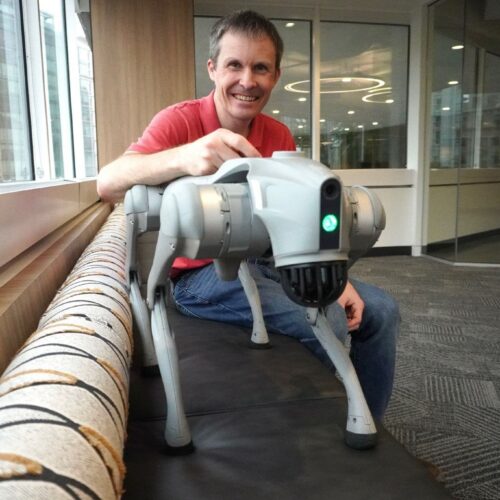
On a sunny morning in June, I walked to work with a quadruped robot beside me. I've never gotten more attention from strangers.
A bunch of people snapped pictures of my robot dog. Several people asked me questions. Was it mine? (Yes.) Did I build it? (No.) Was it being used for surveillance? (No.)
In-Depth Developments & Factual Context
Biological dogs kept a safe distance from my mechanical companion. Some growled or barked at it.
Children were fascinated. I paused and had it do tricks for several of them: "shake hands," do a handstand, or leap into the air.
I live in a leafy Washington, DC, neighborhood called Mount Pleasant. The neighborhood lives up to its name, so my morning commute is mostly downhill. My robot companion, manufactured by the Chinese company Unitree, walked the two miles to my office near the White House with battery capacity to spare.
Industry Impact & Strategic Analysis
I recharged the battery during the workday, but it still struggled on the afternoon walk home. We were now mostly walking uphill, and the temperature had risen to 87°F (30°C). The robot's steps seemed increasingly labored as the path got steeper.
As I entered my own neighborhood, I glanced at two indicators in the corner of my phone screen. One showed that the robot's battery was at 5 percent - dangerously close to empty. The other showed the internal temperature was 84°C (183°F).
We were within sight of my front door when the robot suddenly collapsed. I'm not sure if it ran out of power or overheated, but either way it didn't shut down gracefully - it rolled onto its back with its legs in the air.
Forward Outlook & Market Perspective
Several people have asked me what my robot is useful for, and the honest answer is not much.
Unitree quadrupeds are widely used for academic research, and they are sometimes used for entertainment . But there don't seem to be a ton of practical applications.
Wheeled robots are faster and more energy-efficient, making them better for deliveries. Flying drones are a better choice for a lot of surveying and inspection work. My robot has no arms or hands, making it mostly useless around the house.
But my robot did have one big thing going for it: It was astonishingly cheap.
I paid $4,017. That's more money than I've ever spent to review a product. But it's also far less than I would have had to pay for this type of robot a few years ago. And it's cheap enough that people may find uses for it that wouldn't have made sense at higher prices.
Sometimes what changes the world isn't the invention of a new technology; it's figuring out how to make it affordable enough for a mass market. Xerox built the first personal computer with a graphical user interface, but companies like Apple, IBM, and Microsoft made the technology mainstream. Perhaps Unitree will play a similar role for quadruped robots - though, as I'll discuss later, Unitree's robots now face legal restrictions in the United States.
Reporting synthesized and verified under Nexvoro.tech editorial guidelines. Full primary records referenced via Ars Technica.
Reporting synthesized under Nexvoro.tech Editorial Standards • Referenced via Ars Technica
Verified Dispatch