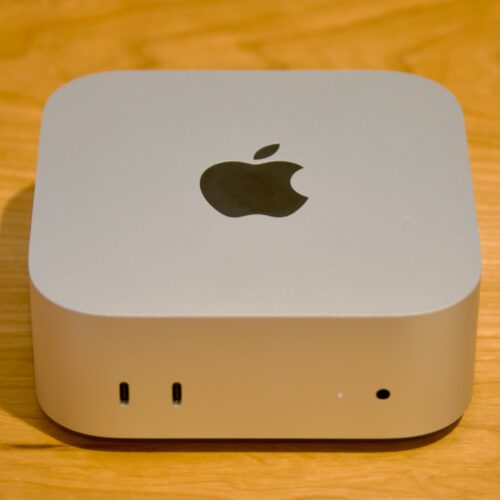
As IFA 2026 wraps up in Berlin, Europe's premier tech showcase has pivoted from superficial smart-home novelties to deeply integrated spatial computing, enterprise-grade edge AI, and modular hardware durability. This year's floor signals a critical maturity phase for global tech giants navigating stringent EU mandates and shifting consumer priorities.
By Nexvoro Tech Wire
PUBLISHED SUN, SEP 6, 2026 5:46 AM UTC • 6 MIN READ
The Berlin Paradigm Shift: Beyond Incremental Upgrades
For years, the Berlin Messe during late summer served as a sprawling playground for incremental consumer electronics updates—slightly thinner televisions, marginally brighter smart bulbs, and iterative smartphone refreshes. However, the closing of IFA 2026 marks a watershed moment for the industry. Against a backdrop of macroeconomic headwinds, tightening European Union regulatory frameworks, and a more discerning global enterprise and consumer base, the 2026 showcase reflected a fundamental recalibration. Tech giants and nimble hardware startups alike pivoted away from gimmick-driven smart-home ecosystems toward resilient, modular, and deeply intelligent device architecture.
From Samsung and LG to hardware innovators like Dyson and Haier, the overarching narrative of IFA 2026 was not merely about what devices can do on paper, but how they sustain themselves operationally, integrate localized edge computing, and comply with the European Union’s aggressive Right-to-Repair and Ecodesign for Sustainable Products Regulation (ESPR). For Wall Street analysts and Silicon Valley product teams tracking the global hardware chessboard, Berlin offered a clear preview of the next hardware super-cycle—one governed by utility, longevity, and software-defined adaptability.
Edge AI and Silicon Realities on the Show Floor
Artificial intelligence has officially migrated from cloud-dependent server farms to localized silicon, and IFA 2026 served as the proving ground for on-device neural processing units (NPUs). Unlike previous cycles where 'AI' functioned primarily as a marketing buzzword for cloud-connected voice assistants, this year’s standout hardware demonstrated tangible, offline utility. Manufacturers across personal computing, mobile ecosystems, and home robotics showcased low-power NPUs capable of handling complex biometric analysis, predictive maintenance algorithms, and real-time audio-visual processing without pinging a remote data center.
This shift toward localized edge intelligence is driven by both privacy mandates and corporate risk management. Enterprise buyers and privacy-conscious consumers increasingly reject hardware that pipelines raw telemetry to third-party cloud servers. By embedding advanced silicon directly into form factors ranging from ultra-slim laptops to connected appliances, hardware manufacturers are insulating themselves against future regulatory crackdowns while offering lightning-fast response times. For semiconductor designers, the success of these implementations at IFA underscores a surging demand for power-efficient silicon capable of sustaining heavy computational workloads under strict thermal and battery constraints.
The Regulatory Crucible: Adapting to the EU Green Tech Mandate
No analysis of IFA 2026 can be complete without examining the regulatory heavy hand of the European Union. The bloc's stringent environmental directives, including universal USB-C requirements, mandatory battery longevity disclosures, and expansive repairability indexes, are no longer viewed merely as compliance hurdles by major OEMs. Instead, they have been weaponized as key market differentiators. Companies that once pushed sealed, disposable electronics are now redesigning their internal architectures for modularity.
At the Berlin exhibition, prominent electronics manufacturers highlighted proprietary modular repair frameworks, emphasizing easily swappable battery modules, standardized internal fasteners, and software diagnostics accessible to independent repair technicians. This circular economy pivot carries profound financial implications. While upfront manufacturing costs may experience a minor uptick due to redesign expenses, long-term brand loyalty and reduced warranty-claim overhead are projected to boost enterprise margins. Furthermore, hardware engineered to meet European standards is inherently positioned to clear upcoming regulatory hurdles in North American and Asian markets as global standards converge toward sustainability.
Convergence of the Smart Home and Enterprise Spatial Computing
The boundary between consumer electronics and enterprise-grade infrastructure blurred significantly at IFA 2026. Haier, Samsung, and other major industrial players moved beyond simple connected white goods, presenting unified IoT architectures designed to manage residential and commercial energy grids dynamically. These systems leverage predictive energy pricing models, communicating directly with local smart grids to optimize power consumption during peak load hours—a critical feature amid fluctuating European energy markets.
Simultaneously, spatial computing accessories and augmented reality interfaces transitioned from niche gaming novelties to practical productivity tools. Manufacturers unveiled lightweight, enterprise-ready smart glasses and spatial displays designed for remote engineering, logistics management, and immersive collaboration. By focusing on ergonomic comfort, high-density micro-OLED panels, and seamless integration with existing enterprise software stacks, hardware developers are finally addressing the enterprise adoption barriers that stalled earlier iterations of wearable computing.
Strategic Outlook for Silicon Valley and Wall Street
As the dust settles on Berlin, the strategic takeaway for tech executives and institutional investors is clear: the era of speculative hardware expansion is giving way to disciplined, high-utility engineering. The products crowned 'Best in Show' across major tech publications share common DNA—they solve genuine friction points, respect user privacy through edge processing, and adhere to rigorous environmental standards without sacrificing aesthetic or functional appeal.
For US technology firms, the innovations showcased at IFA 2026 serve as both a competitive benchmark and a regulatory warning. As global markets increasingly align with European standards of durability and data sovereignty, American hardware strategy must evolve past planned obsolescence. The winners of the next hardware decade will be those companies that successfully marry bleeding-edge artificial intelligence with uncompromising physical longevity, transforming consumer electronics into enduring, upgradeable assets.
Reporting synthesized under Nexvoro.tech Editorial Standards • Referenced via Google News US Technology
Verified Dispatch