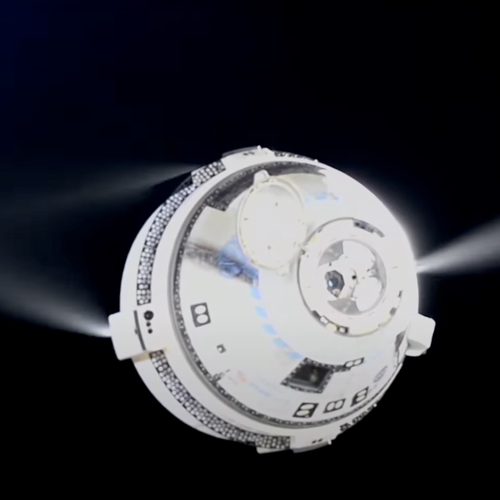
NASA has announced it will exercise options for two additional Starliner flights while providing $359 million to help Boeing overhaul its troubled reaction control system and certify the Vulcan rocket. The strategic move secures the nation's low-Earth orbit transport pipeline ahead of SpaceX Dragon's impending retirement.
By Nexvoro Tech Wire
PUBLISHED TUE, SEP 29, 2026 12:35 AM UTC • 6 MIN READ
NASA Secures Future Low-Earth Orbit Access
In a major strategic pivot to maintain uninterrupted human spaceflight capabilities, NASA announced on Monday that it will exercise options to purchase two additional flights on Boeing's Starliner spacecraft. This definitive confirmation follows reporting by Ars Technica earlier this month regarding NASA's long-term strategy to sustain access to low-Earth orbit (LEO) after the eventual retirement of SpaceX's Crew Dragon vehicle. The decision underpins the federal government's commitment to maintaining a robust, redundant transportation infrastructure for American astronauts.
During a comprehensive news conference on Monday afternoon, NASA Administrator Jared Isaacman elaborated on the timeline driving these aerospace transitions. "I do not think it's a secret that SpaceX intends to sunset older platforms like Falcon and Dragon as they concentrate on their next-generation capability, Starship," Isaacman stated. With Dragon having successfully ferried NASA astronauts into orbit for more than six years, the space agency faced a critical juncture in evaluating how it will reach the International Space Station (ISS) and upcoming commercial destinations.
Starliner's Rocky Road and Financial Lifeline
While SpaceX has dominated routine crew rotation duties, Boeing's path has been fraught with severe engineering and financial hurdles. Starliner experienced numerous operational anomalies on uncrewed test flights in 2019 and 2022, culminating in the most serious incidents during its first crewed test flight in June 2024, where thruster malfunctions nearly led to the catastrophic loss of two astronauts. These persistent setbacks fueled widespread speculation that Boeing might abandon the Starliner program entirely, especially as losses mounted past the $2 billion mark.
The fact that NASA - which had already funneled $5.1 billion into the fixed-price Commercial Crew program for Boeing - felt compelled to inject fresh capital highlights the gravity of the situation. Dana Weigel, manager of NASA's Low Earth Orbit Program, disclosed during the briefing that the space agency will allocate $359 million to Boeing. This funding is specifically earmarked to complete a comprehensive rebuild of the overheated reaction control system thrusters and to certify United Launch Alliance's (ULA) Vulcan rocket for human-rated missions following the eventual retirement of the Atlas V vehicle.
Mission Manifests and Post-2030 Strategy
With the latest contractual updates, NASA has officially expanded its total contracted spaceflights on Starliner to six missions. The agency's current manifest outlines an uncrewed demonstration flight, designated Starliner-1, targeted to launch between December 2026 and January 2027. This will be followed by three crewed missions already on contract, with the inaugural operational flight, Starliner-2, slated to fly in mid-2028 under the command of veteran astronaut Woody Hoburg.
As NASA contemplates extending the operational lifetime of the International Space Station out to 2032 and actively supports the development of private commercial LEO destinations (CLDs), reliable transport is paramount. Although external critics argued that NASA should initiate a fresh crew competition involving contenders like Blue Origin or The Exploration Company, Administrator Isaacman resisted that path. Citing projected demand of just two astronaut seats every six to nine months and the multi-billion-dollar price tag of a new competition, leadership concluded that abandoning the nation's substantial existing investment in Starliner would be fiscally imprudent.
Boeing Embraces Sole Provider Status
Despite the program's troubled history and severe financial toll, aerospace giant Boeing appears re-energized by the prospect of securing its position as a primary architect of American orbital transport. Company executives emphasized their commitment to meeting NASA's stringent safety and operational requirements as the vehicle transitions toward its next phase of service delivery.
"We're incredibly excited about the partnership with NASA," said John Mulholland, vice president and program manager of Commercial Crew at Boeing. "To continue to fly to the International Space Station, and then obviously, with the Vulcan certification, missions beyond the current six that we have." While operational challenges and pricing transparency - as noted by officials who acknowledged they "couldn't provide detailed pricing to the CLD suppliers" - remain under scrutiny, Boeing is positioning itself to shoulder the nation's astronaut transportation duties as the space industry prepares for a major generational shift.
Reporting synthesized under Nexvoro.tech Editorial Standards • Referenced via Ars Technica
Verified Dispatch