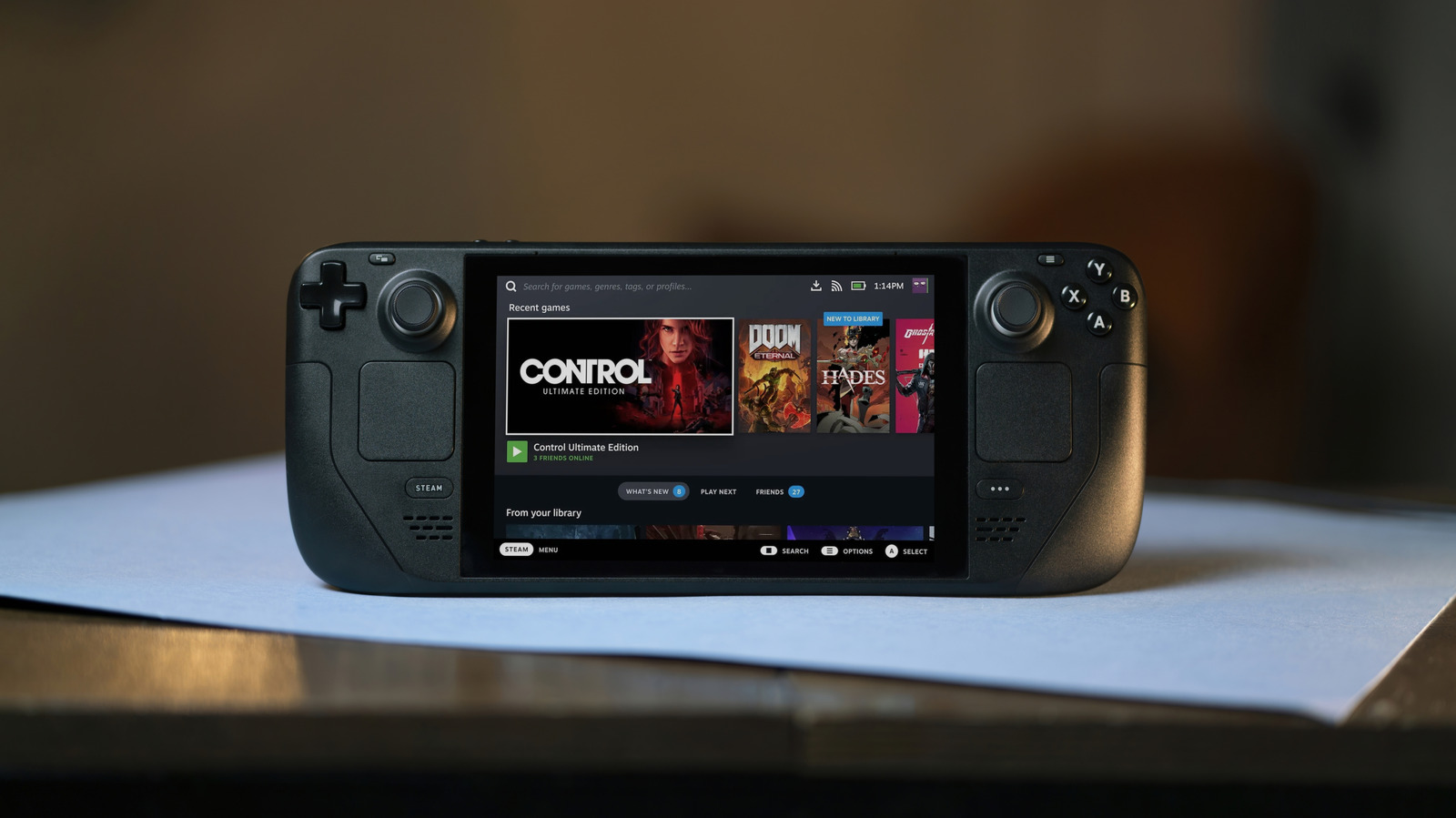
As hardware pricing surges and a wave of aggressive competitors floods the market, we examine whether Valve's pioneering handheld still holds its crown in an increasingly unforgiving ecosystem. We break down the hardware economics, software moat, and enterprise implications for the future of mobile PC gaming.
By Nexvoro Tech Wire
PUBLISHED SUN, SEP 6, 2026 5:48 AM UTC • 7 MIN READ
The Pioneer's Dilemma in a Maturing Market
When Valve Corporation introduced the Steam Deck in early 2022, it fundamentally reshaped consumer hardware expectations. By compressing the capability of a mid-tier gaming rig into an ergonomic, Linux-powered handheld, Valve did not just launch a product; it birthed an entirely new hardware category. Yet, looking across the landscape in 2026, the technology sector finds itself asking a sobering question: Does the original disruptor still command consumer loyalty, or has relentless market pressure relegated it to yesterday's innovation?
Today's consumer electronics climate is defined by escalating silicon costs, tightening supply chains, and rising consumer expectations. While competitors from both legacy PC OEMs and aggressive Asian hardware manufacturers have flooded the channel with OLED screens, blistering refresh rates, and raw processing muscle, Valve's flagship device faces its sternest test. The core value proposition—unprecedented accessibility combined with open-ecosystem flexibility—is being stress-tested by macroeconomic headwinds and fierce technological leapfrogging.
Parsing the Hardware Economics and Margin Pressures
To understand the 2026 viability of the Steam Deck, one must first analyze the economics of its production and pricing. Valve famously adopted a loss-leader or razor-thin margin strategy at launch, treating hardware primarily as a vehicle for digital storefront expansion. However, sustained inflation, shifting semiconductor tariffs, and the rising cost of high-density memory have forced subtle price adjustments across the industry.
Competitors entering the arena do not always have the luxury of a multi-billion-dollar digital distribution monopoly to subsidize hardware losses. Consequently, rival handhelds often command premium price points—frequently eclipsing the $800 to $1,000 threshold. For budget-conscious developers and mainstream gamers alike, the Steam Deck’s relative affordability remains its strongest anchor. Yet, under the cold scrutiny of Wall Street financial modeling, hardware margins remain a bottleneck for standalone profitability, keeping the focus squarely on ecosystem lock-in.
The Software Moat: SteamOS and Proton as Strategic Assets
While hardware specifications tell one story, software execution tells another. The true genius of the Steam Deck has never been its raw silicon—it is Proton, Valve’s translation layer that allows Windows-native binaries to execute smoothly on a Linux architecture. In 2026, this software moat has deepened significantly.
For enterprise software developers and independent studios alike, optimizing for SteamOS has transformed from a quirky side-project into a mandatory developmental checklist. Valve’s commitment to an open Linux ecosystem stands in stark contrast to the closed, resource-heavy walled gardens favored by competitors relying on standard Windows deployments. While Windows-based handhelds often struggle with background process bloat, battery drain, and clumsy touch-navigation, the Steam Deck offers a console-like fluidity powered by robust, continually refined kernel-level engineering.
Navigating the Competitive Chessboard
Valve is no longer playing a lone hand. The portable PC gaming sector now features sophisticated entries from established PC giants and nimble startups alike. These rivals have successfully addressed the Steam Deck's historic pain points: underwhelming battery life, sub-1080p display resolutions, and restricted international distribution channels.
Yet, market saturation brings its own complexities. Many competing devices suffer from fragmented software support, leaving users to grapple with manual driver updates and clunky proprietary launchers. Valve’s masterstroke has been consistency. By maintaining a single, standardized hardware target for developers, the company ensures that games optimized for the platform run predictably—a luxury that developers, pressed for time and resources, deeply appreciate.
Regulatory Scrutiny and the Open Ecosystem Debate
As the digital storefront wars attract heightened regulatory attention from antitrust authorities in the United States and the European Union, Valve’s positioning takes on broader geopolitical and economic significance. Unlike mobile app stores governed by strict duopolies, Valve maintains an open platform ethos that permits third-party stores, alternative launchers, and user-generated modifications.
This commitment to openness shields Valve from some of the acute regulatory crosshairs facing other tech titans, but it also introduces friction. As anti-cheat software vendors grapple with Linux kernel compatibility, Valve must continuously negotiate with major publishers to maintain game accessibility. The resilience of the Steam Deck in 2026 is a direct barometer of whether open computing can successfully carve out territory against heavily guarded corporate ecosystems.
Strategic Outlook: The Road to Steam Deck 2
For enterprise observers and tech enthusiasts tracking the next phase of mobile computing, the Steam Deck occupies a unique transitional space. It is simultaneously a mature product nearing the twilight of its primary architectural lifecycle and a proven template for future form-factors.
Whether a consumer should invest in a Steam Deck in 2026 depends entirely on their technological priorities. Those demanding bleeding-edge framerates and native AAA fidelity at ultra settings will naturally gravitate toward pricier, high-wattage alternatives. However, for users who value software stability, ergonomic design, open-source empowerment, and unrivaled value-per-dollar, Valve’s device continues to punch well above its weight class. As the industry awaits Valve's next major hardware evolution, the original Deck remains the undisputed benchmark of modern portable PC gaming.
Reporting synthesized under Nexvoro.tech Editorial Standards • Referenced via Engadget
Verified Dispatch