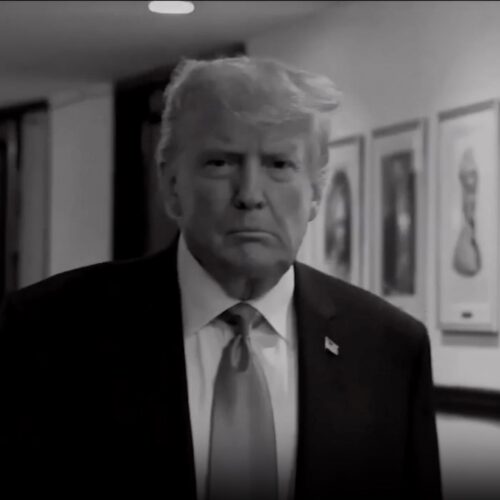
Special Counsel Jack Smith has stated that his exhaustive federal investigations conclusively demonstrated the commission of serious federal crimes by Donald Trump. The assertions bring renewed focus to the intricate legal statutes, constitutional debates, and prosecutorial frameworks defining executive accountability.
The Foundation of the Special Counsel Investigation
In developments drawing intense national attention and dominating search trends across the United States, Special Counsel Jack Smith has asserted that his high-profile federal investigations established "beyond a reasonable doubt" that Donald Trump engaged in serious criminal conduct. The remarks encapsulate the culmination of months of meticulous evidence-gathering, grand jury proceedings, and forensic analysis led by the Department of Justice's special operations unit. Smith's ongoing assessments frame the central thesis of multi-jurisdictional inquiries that have continuously tested the boundaries of American jurisprudence and executive immunity.
The scope of the special counsel's mandate involved probing efforts to overturn the 2020 presidential election results, culminating in the events of January 6, 2021, as well as the alleged mishandling of classified documents recovered at Mar-a-Lago. According to investigative summaries released throughout the proceedings, prosecutors compiled a comprehensive evidentiary trail featuring testimony from senior West Wing officials, digital forensics, and contemporaneous notes. Smith's team maintained that this record directly links the former president's directives to specific violations of federal statutes designed to safeguard democratic processes and national security assets.
Legal scholars and constitutional law experts have noted that the evidentiary threshold articulated by Smith - proving guilt "beyond a reasonable doubt" - is the gold standard required in criminal courtrooms across the nation. By publicly utilizing this standard, the special counsel is signaling the profound depth and reliability of the government's case files, even as procedural motions and appeals navigate through appellate courts. The assertion serves as a definitive statement from the prosecution regarding the integrity and robustness of the factual matrix assembled against the former chief executive.
Constitutional Debates and Executive Accountability
At the core of the legal wrangling surrounding Jack Smith's investigations are profound constitutional debates regarding the doctrine of presidential immunity and the separation of powers. The defense teams representing Donald Trump have consistently argued that executive actions taken while in office enjoy sweeping immunity from criminal prosecution, framing the special counsel's indictments as an unprecedented and politically motivated expansion of prosecutorial power. These arguments have forced federal judges and appellate panels to grapple with foundational questions regarding the limits of executive authority and the accountability of commanders-in-chief under criminal law.
In response, the special counsel's office has maintained that no individual, regardless of office, stands above the foundational statutes of the United States. Federal prosecutors argued in various court filings that the alleged offenses - ranging from conspiracy to defraud the United States to willful retention of national defense information - constitute private or unconstitutional acts that fall well outside the protective umbrella of official presidential duties. This tension has prompted landmark rulings from the Supreme Court and lower federal courts, establishing delicate legal precedents that will undoubtedly shape executive power dynamics for generations to come.
The procedural trajectory of these cases highlights the friction between expediting accountability and navigating complex appellate reviews. As lower courts evaluate motions regarding immunity and evidentiary admissibility, the timeline of formal judicial proceedings has intersected dynamically with the broader political calendar. Yet, Smith's insistence on the clarity and strength of the evidence underscores a steadfast commitment to traditional prosecutorial standards, regardless of external pressures or shifting political landscapes.
Statutory Frameworks and Evidentiary Integrity
The charges and investigative findings marshaled by Jack Smith are anchored in specific, highly technical federal statutes. In the election interference inquiry, prosecutors utilized laws originally enacted during the Reconstruction Era to combat voter intimidation and conspiracies against civil rights, alongside statutes prohibiting obstruction of an official proceeding. These legal instruments require the government to demonstrate specific intent and coordinated action, hurdles that the special counsel's office systematically addressed through the introduction of internal campaign communications, witness depositions, and expert testimonies.
Regarding the classified documents case, the statutory framework centered heavily on the Espionage Act, specifically provisions concerning the willful retention of national defense documents and obstruction of justice. Federal investigators documented a meticulous paper and digital trail tracing the movement of sensitive materials, compliance failures with federal subpoenas, and efforts to conceal records from authorized federal agents. The integration of high-resolution surveillance footage, text messages, and audio recordings provided the jury pools and judicial reviewers with tangible proof supporting the government's assertions of deliberate non-compliance.
The meticulous documentation compiled by the special counsel's team was designed to withstand rigorous cross-examination by elite defense counsel. By adhering strictly to traditional investigative protocols - including grand jury indictments, subpoena enforcement, and peer-reviewed legal drafting - Smith sought to insulate the office's conclusions from accusations of procedural irregularity. The resulting dossiers represent some of the most extensive federal evidentiary compilations assembled in modern American legal history, setting a distinct benchmark for white-collar and public corruption prosecutions.
Future Implications for Law, Government, and Public Trust
The fallout from Jack Smith's investigations extends far beyond the immediate courtroom battles, reverberating deeply across the American political and institutional landscape. Government watchdogs, lawmakers, and legal analysts are actively debating the long-term ramifications of utilizing federal criminal statutes against a former president and current political candidate. These discussions touch on vital questions regarding institutional norms, the Department of Justice's independence, and the mechanisms available to a democratic society to address allegations of severe executive malfeasance.
Public reaction to the special counsel's disclosures has been deeply polarized, reflecting broader ideological divisions within the American electorate. For supporters of accountability, Smith's declarations validate the principle that the rule of law applies universally, serving as a necessary defense of democratic institutions. Conversely, critics and defense advocates view the proceedings as an overreach that undermines public confidence in neutral state institutions. This dichotomy underscores the formidable challenge facing the American legal system: delivering impartial justice in an era of intense political polarization.
Ultimately, the record compiled by Jack Smith will serve as a foundational historical and legal document for decades. Whether viewed as a triumph of prosecutorial diligence or a cautionary tale of judicial intervention in politics, the proceedings have irrevocably altered the discourse surrounding presidential power, executive privilege, and the enforcement of federal criminal law. As the legal maneuvers continue to unfold in appellate chambers and public forums, the core questions raised by the special counsel remain central to the ongoing evolution of American governance.
Reporting synthesized under Nexvoro.tech Editorial Standards • Referenced via Google Trends US (100K+ searches)
Verified Dispatch