Consumer advocacy group Public Citizen has filed a formal complaint with federal regulators over Trump campaign ads allegedly financed by Department of Homeland Security funds. Meanwhile, political and regulatory friction mounts as broadcasters navigate complex equal-time rules and potential licensing pressures.
By Nexvoro Tech Wire
PUBLISHED TUE, SEP 29, 2026 10:38 PM UTC • 7 MIN READ
Public Citizen Files Formal Complaint Over Taxpayer-Funded Commercials
Broadcasters should be ordered to stop running Trump commercials that appear to violate US laws, consumer advocacy group Public Citizen said today in a complaint filed to the Federal Communications Commission (FCC) and the Federal Trade Commission (FTC). The advocacy group argues that the advertisements clearly breach statutory provisions prohibiting the use of taxpayer funds for government propaganda, alongside strict federal laws restricting political activity by federal government employees.
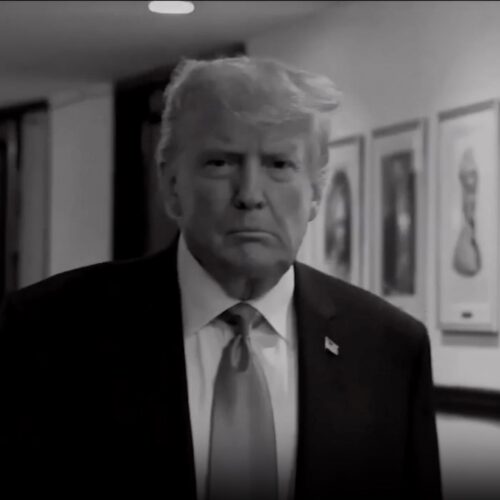
At the center of the controversy is a commercial titled 'The Final Battle,' which Public Citizen identified as a direct, copied iteration of an ad originally deployed by the Trump campaign committee during the 2024 presidential election cycle. In the ad's dead serious black-and-white footage, Trump is seen marching down a corridor with a stern look, while the audio blares: 'This is the final battle. With you at my side, we will demolish the deep state. We will expel the warmongers from our government.' A notice at the bottom of the screen announces: 'Paid for by the US government.'
The ad continues with Trump declaring, 'We will cast out the communists, Marxists, and fascists. We will throw off the sick political class that hates our country, we will rout the fake news media, and we will liberate America from these villains once and for all.' The production utilizes identical video and audio assets from the 2024 campaign, with the sole distinguishing modification being the funding attribution line replacing the original campaign committee disclosure with the US government.
Congressional Investigation Targets Department of Homeland Security Allocations
Senate Democrats responded sharply to the development, dispatching a formal inquiry letter to Homeland Security Secretary Markwayne Mullin. The lawmakers accused the administration of illegally utilizing American tax dollars to underwrite government propaganda and place past campaign advertisements back onto public airwaves. According to congressional estimates, the Department of Homeland Security has dedicated approximately $20 million to this initiative, tapping funds originally provided to US Customs and Border Protection under Republicans' 'One Big Beautiful Bill Act' for commemorative events relating to border security.
Corroborating the legislative inquiry, a recent Wall Street Journal report indicated that President Trump personally pushed for the rollout of these specific advertisements and remained actively involved in their creation. The White House has maintained that the spots function legitimately as public service announcements. Beyond 'The Final Battle,' the ad buy includes additional spots featuring declarations such as 'America will never be a communist country,' and statements asserting that 'the United States of America is the most successful, most accomplished, most exceptional nation ever to exist in human history.'
Analytics firm AdImpact has estimated that over $1.7 million in federal funds have already been expended simply airing these controversial spots across major media markets. The updated version of the 'Final Battle' commercial notably aired during NBC's Saturday Night Live, Fox News Sunday, and several high-profile college and NFL football games this past weekend, thrusting the debate squarely into mainstream entertainment and sports viewing.
Regulatory Outlook and Broadcaster Hesitancy Amid FCC Pressure
Despite the formal complaints lodged by consumer advocates, industry analysts note that it is highly unlikely the FCC or FTC will order broadcasters to halt the transmission of the Trump ads. FCC Chairman Brendan Carr's historical track record of scrutinizing broadcasters disliked by Trump suggests he is significantly more inclined to threaten the broadcast licenses of networks that refuse to carry the material. Furthermore, both Carr and FTC Chairman Andrew Ferguson have previously supported the expansion of executive power over nominally independent federal agencies.
Major broadcasting networks and their corporate parents find themselves in an increasingly precarious operational environment when evaluating political ad submissions. ABC owner Disney, which is currently fighting an ongoing FCC proceeding that could block the renewal of vital station broadcast licenses, outlined in a recent lawsuit that its internal editorial decision-making has been directly impacted by regulatory threats originating from the commission.
Illustrating the chilling effect on media programming, ABC's daytime talk show The View has refrained from airing any interviews with political candidates since the FCC initiated its current proceeding. Additionally, late-night host Jimmy Kimmel revealed he shifted an interview with a Democratic candidate to YouTube rather than broadcast television to shield local ABC stations from potential regulatory fallout. While the FCC has historically exempted interviews on daytime and late-night talk shows from the traditional equal-time rule, the current Trump-appointed FCC leadership has actively upended that long-standing policy.
The Equal-Time Rule Under Siege in a Polarized Media Landscape
The equal-time rule mandates that broadcast stations provide comparable opportunities to all legally qualified candidates for public office, a cornerstone of American broadcasting regulations designed to ensure fair political discourse. However, the blending of official government communications with explicitly partisan campaign messaging has severely strained the enforcement mechanisms and practical application of these rules. Broadcasters remain intensely wary of rejecting ads tied to federal agencies, balancing statutory compliance against the severe threat of retaliatory administrative actions from federal regulators.
Legal experts suggest that the intersection of appropriated border security funds and repurposed campaign media sets a profound precedent for executive branch communication strategies. As public interest groups and lawmakers continue to demand transparency regarding the $20 million DHS allocation, the structural independence of regulatory bodies like the FCC and FTC remains a central flashpoint in contemporary American governance and media law.
Reporting synthesized under Nexvoro.tech Editorial Standards • Referenced via Ars Technica
Verified Dispatch