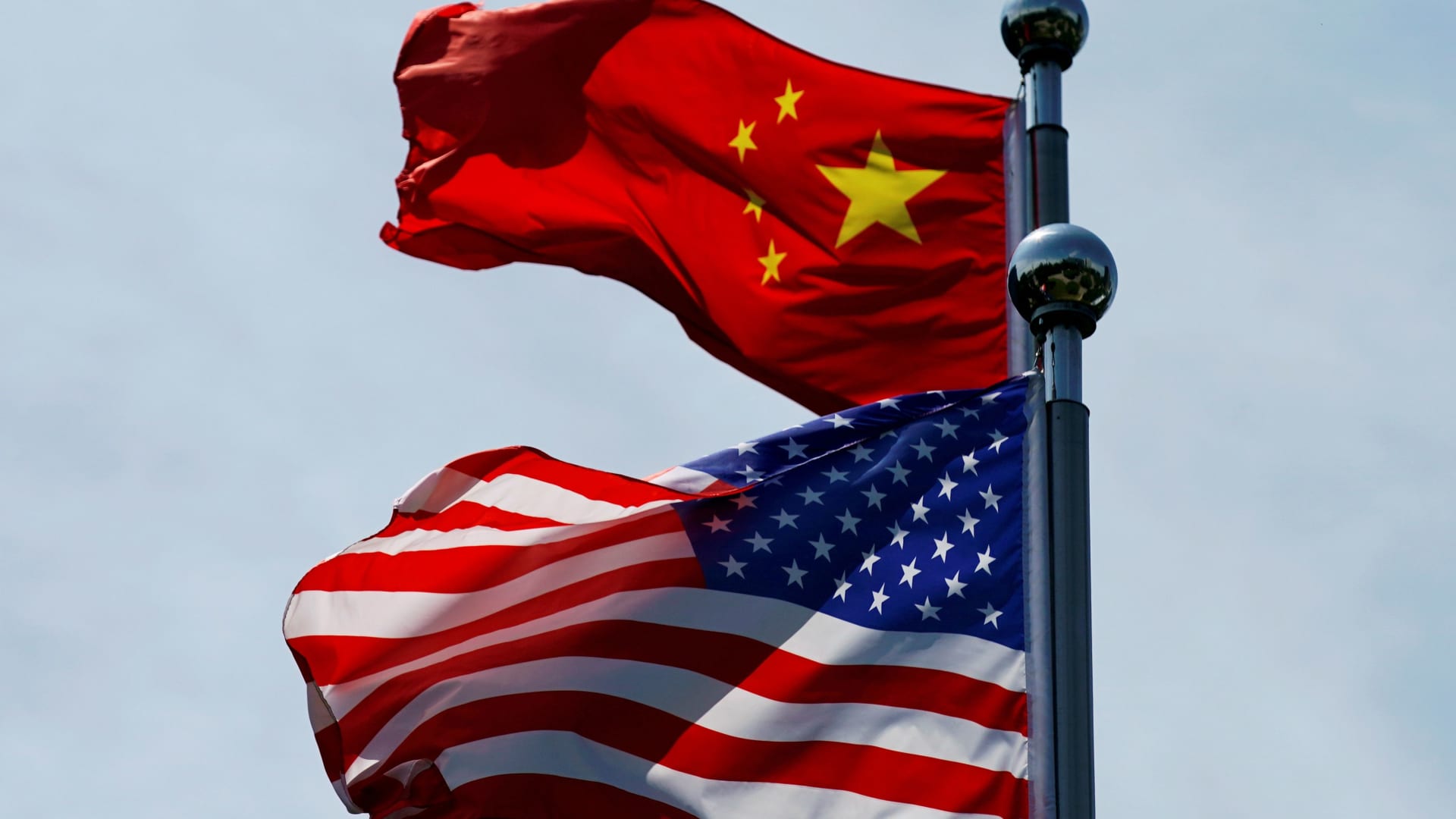
As President Xi Jinping arrives at the White House for his first state visit in over a decade, Beijing is actively reframing the U.S.-China relationship through the lens of avoiding the 'Thucydides Trap.' The diplomatic shift signals a push for a new paradigm of intense, yet non-confrontational, global rivalry.
By Nexvoro Tech Wire
PUBLISHED SAT, SEP 26, 2026 6:38 AM UTC • 7 MIN READ
A Diplomatic Re-Framing of Global Hegemony
BEIJING - In a significant shift in diplomatic rhetoric, Chinese President Xi Jinping has signaled a departure from the fatalistic view that conflict between a rising power and an established hegemon is inevitable. Upon his arrival at the White House this Thursday, Xi explicitly stated that the 'Thucydides Trap' - a concept popularized by Harvard scholar Graham Allison - can be overcome. This assertion marks a notable evolution from his previous inquiries into whether the two nations could avoid such a fate, suggesting a deliberate attempt by Beijing to stabilize the volatile bilateral relationship.
The Thucydides Trap, named after the ancient Athenian general who chronicled the Peloponnesian War, posits that the structural stress caused by a rising power challenging an established one often leads to catastrophic conflict. By invoking this concept, Xi is positioning China as a strategic actor seeking to decouple national growth from military escalation. This narrative shift is designed to reassure Washington that China's rapid rise is not inherently a precursor to war, but rather a competitive challenge that can be managed through diplomacy and crisis prevention.
The Intellectual Architecture of the 'Trap'
Graham Allison, the founding dean of the Harvard Kennedy School and a former high-level official in the Clinton and Reagan administrations, has become a central figure in this intellectual discourse. Having met with Xi multiple times, including a recent engagement at the June 2026 World Economic Forum, Allison's influence on the Chinese leadership is profound. The Harvard Kennedy School has served as a training ground for generations of Chinese officials, creating a unique channel for the exchange of Western political theory and Eastern strategic application.
Xi's interest in the concept is not new; he first brought it to the global stage in a 2014 interview with HuffPost, where he called for collective action to avoid destructive tensions. State media reports following his 2015 visit to the U.S. further clarified his stance: Xi believes that it is the mutual suspicion between major powers, rather than any historical inevitability, that drives conflict. By framing the current era as one of 'healthy competition,' Xi is attempting to replace the anxiety of the Thucydides Trap with a framework of managed rivalry.
Defining the Bottom Line: Competition Without Confrontation
During the summit, Xi emphasized that the U.S. and China should engage in a 'race of catching up with one another' rather than a zero-sum wrestle for dominance. This rhetoric is aimed at establishing a 'bottom line' for the relationship, focusing on improving military-to-military crisis communication to prevent accidental escalation. For global markets and geopolitical observers, this represents a crucial effort to inject certainty into a relationship that has been defined by trade wars, technological friction, and ideological divergence.
Cui Shoujun, a professor at Renmin University of China's School of International Studies, characterized this commitment to non-confrontation as the most significant political outcome of the summit. By explicitly rejecting the necessity of conflict, both sides are attempting to create a safety rail for their intense competition. However, the success of this strategy remains to be seen, as the underlying structural tensions - ranging from economic policy to regional security - continue to test the limits of this new diplomatic language.
The Unresolved Friction Points
While the summit focused on the macro-level management of the U.S.-China relationship, significant hurdles remain. President Trump's public comments during the visit remained focused on broad themes of collaboration, leaving specific policy disputes largely unaddressed in the immediate readout. Notably, the issue of Taiwan remains a flashpoint; Beijing's official readout indicated that Xi called on the U.S. to 'oppose Taiwan independence,' yet there has been no public indication that the U.S. administration has altered its stance or engaged in a substantive debate on the matter.
As the two leaders navigate this complex landscape, the world is watching to see if the 'healthy competition' rhetoric can survive the pressures of domestic politics in both nations. The absence of a clear resolution on sensitive sovereignty issues suggests that while the 'Thucydides Trap' may be the current focus of diplomatic discourse, the structural realities of the U.S.-China rivalry remain deeply entrenched. The coming months will determine whether this summit serves as a genuine turning point or merely a temporary pause in a long-term strategic competition.
Reporting synthesized under Nexvoro.tech Editorial Standards • Referenced via CNBC World & Geopolitics
Verified Dispatch